Disclaimer: This post may contain affiliate links. As an Amazon Associate, I earn from qualifying purchases.
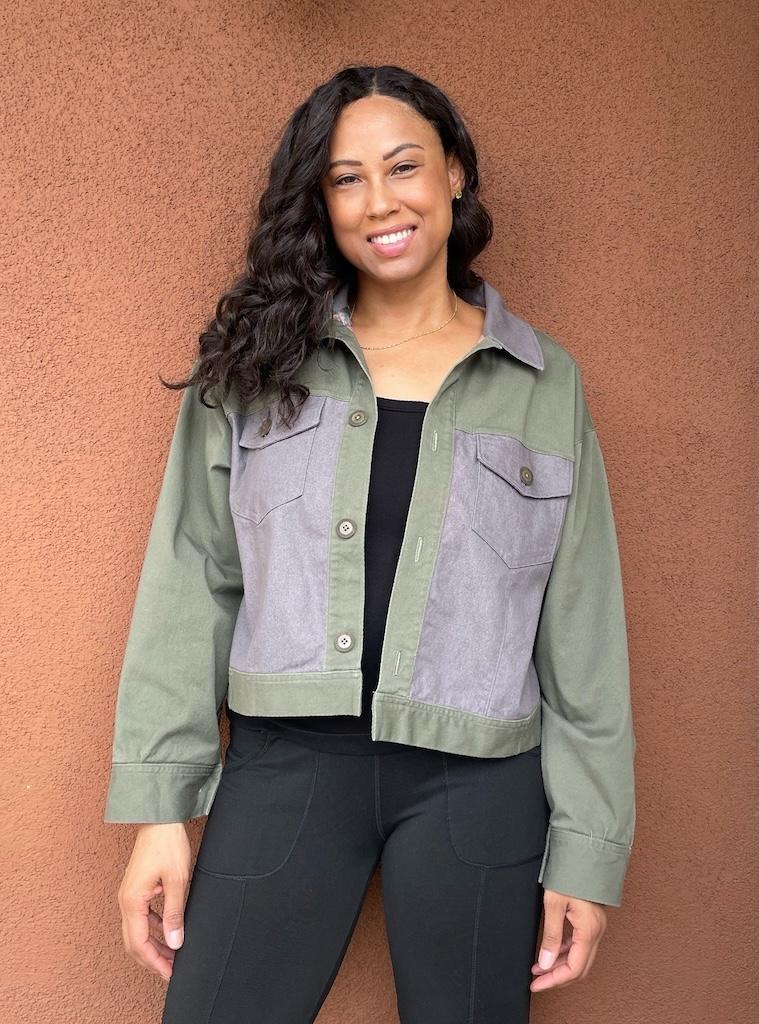
I upcycled my old stash of skinny jeans that sat in my closet. I no longer wore them, so I turned them into a new DIY denim jacket.
They were of various colors and washes, so I ended up with a color-blocked creation. This project took a lot of time, but I absolutely love the results.
Come along with me as I tell you about the materials used, my process, and share photos. This might give you ideas to transform some of your old pants.
Simplicity S8845 Jacket Pattern

I bought Simplicity S8845 sewing pattern when it first came out. This Mimi G Style jacket has sizing from x-small to x-large for women, men, and teens.
This is a well-designed garment with structure. In fact, I bought this pattern three times when it was on sale!
I cut one small, medium, and large. I could have kept the pattern sizes intact or graded them, but they were so cheap.
There are a total of 20 pattern pieces, so there’s a lot to sew. I’d say this is a more advanced sewing project.

You’ll have to make flat fell seams, welt pockets, buttonholes, a collar, cuffs, and a bottom band. Plus, you’ll sew or hammer on buttons.
There’s a helpful sew-along video on YouTube. Very helpful!
Materials
I needed a few things to make this jacket, so let’s go through what I used.
Fabric

Well, since I upcycled jeans for my project, I didn’t have to run out and buy fabric. It took six pairs of Levi’s skinny jeans to make one jacket.
Yes… I needed that many jeans because they were so skinny.
A cheap, stretchy woven denim from the fashion district also sat in my stash. This was the perfect opportunity to use this up for a mockup.
Besides denim, other suggested fabrics are chino, corduroy, sateen, and twill.
Notions

I used 5/8-inch (0.625-inch) dungaree buttons on my jean jacket. You can also use flat or shank buttons.
If you sew the pattern the way it’s designed with all the details, you’ll need 14 buttons total.
I also used medium-weight interfacing. Although some people might say you don’t need it with stretch fabric, I still use it for some structure.
Needle
When sewing denim, I use a jeans needle. You could also use a universal needle.
With the weight of the denim fabric, I used a size 100/16 needle. For topstitching, I used the same size.
Thread

In my sewing machine, I used Gutermann jeans thread. It’s made of 70% polyester and 30% cotton.
For topstitching, I used Gutermann heavy-duty thread in gold. It’s made of polyester.
In my serger, I used Maxi-Lock serger spun thread. It’s for overlocking and made of polyester.
Sewing My Jacket
Sewing this garment took time, as this is a detailed project. The most time-consuming part for me was prepping.
Prepping

This was the first time I had upcycled jeans into a jacket. I had made tote bags out of jeans, and those were much easier.
If you make yours from old pants, give yourself plenty of time to cut and prep.
First, I had to figure out the sizing, so I created a mockup. I’m usually a size smedium—between a small and medium.
I made my mockup in a size small and it was snug around the middle. So, I decided to go with medium to have enough ease to wear a sweater underneath.
With the size figured out, it was finally time to cut those jeans up.

They had different colors and washes. So, I laid them out and visualized what would look best once sewn together.
When color-blocking, you can make your garment symmetrical, or not. I pieced together and it worked out. If not, I would have gone asymmetrical.
The jeans themselves were slimmer cuts, so they worked perfectly with this sewing pattern. I had to sew smaller pieces together to make them big enough to cut from.
It took a long time to lay out and cut all the pieces. Whew!
Construction

Before making my jacket, I watched the sew-along video. This was not the first jean jacket I had made.
But I still followed the written directions in the pattern envelope. And no matter how many times I’ve made welt pockets, they always stump me.
This was the most challenging part for me, as I find them tricky to sew. Everything else went well.

I didn’t make the flat fell seams, as I like to use the serger. I stitched the seams along the seam allowance as usual.
Then serged the ends so they wouldn’t fray when washing. Next, I pressed the seams to the side.
Then I double topstitched them with the heavy-duty gold thread. So, constantly changing out the thread took time.
Adjustments
The length of the jacket was long on me, and I’m tall. So, I cropped it by one inch.
This may not seem like a lot, but it made a difference. This was the only change I made to the sewing pattern.
Finishing Details

After all was done, adding the buttons came last. Now, this didn’t go gracefully.
When I hammered the dungaree buttons, I hit my thumb. Ouch!
Project Notes
It’s best to make a mockup if you’re unsure about the sizing. If possible, try to use fabric similar to the one with which you will make your jacket.
I found cheap fabric in the fashion district that was off-grain. The woven stretch was similar to the skinny jean fabric.
When topstitching, you may want to adjust your stitch length. My machine automatically selects the length, and I always forget to change it.
Although going symmetrical with the color blocking is cool, you can see more examples of asymmetrical designs online.
Don’t get upset if this pattern takes you many hours to sew. I don’t know how many days it took, but I took my time making it. I wasn’t in any kind of rush!
Final Thoughts

One day, I was walking through Nordstrom wearing my jacket, and an employee asked if I had bought it from the luxury designer section. Whaaat?
Now, that made me smile! After all the sweat, blood, and tears, it was nice to get such a compliment!
More Sewing Projects
I have other related posts on my blog. You might want to check them out.
- I used this same sewing pattern to make a sateen jacket you’ll want to see.
- I used earth-colored remnants in my stash to make a two-toned shacket.
- What about making a denim skirt with a comfy waistband?
By the way, I’d love to hear all about your sewing adventures!
Originally published: November 8, 2024