Disclaimer: This post may contain affiliate links. As an Amazon Associate, I earn from qualifying purchases.
Would you like to know how to wash handmade clothes? I created a guide to help you keep your clothes looking nice.
Sometimes when I finish a garment, I don’t want to wear it and mess it up. However, knowing how to care for the fabric can extend its life.
I’ll share my step-by-step process for hand and machine washing. I’ll also give you notes on drying and ironing so your clothes will last.
Sorting Your Clothes

Before washing, we’ll need to take a look at the fabric and sort the load.
You’ll want to look at the care instructions. You can find this on the side of the bolt when purchasing fabric or in the description online.
Some materials need to be dry cleaned only. So, this method will not work for those clothes.
I always separate clothes by lights and darks. Wash similar colors together. For example, I wash dark denim with black clothes.
Wash your light-colored clothes together. That way, any residual dye from dark clothes won’t come off on the light ones.
Materials for Handwashing
- Small bucket, tub, or sink
- Gloves
- Water
- Detergent
- Fabric softener
- Drying rack or towel
How to Wash Clothes by Hand

I handwash the delicates I’m most worried about. These include lingerie, lacey and sheer tops, and loose-weave sweater fabric.
Overall, my method is pretty gentle but gets things clean. You won’t use a washboard or any scrubbing tools.
1. Fill a small tub with water.

First, I’ll fill a small tub with cold water. You can also use a bucket or the sink. If you use the sink, use the stopper or plug to keep the water in.
I usually wear latex gloves—the same kind you’d use for washing dishes. Using gloves is up to you, but I don’t dip my bare hands in detergent.
2. Add detergent.

I like to use a non-allergenic, unscented, gentle detergent. The one I use is Forever New, which is concentrated.
I add about a teaspoon to the tub and mix it into the water. You don’t need much if you only have a couple things to wash like I do.
3. Add the clothes.

You can put your clothes in the tub now. I swirl them around and make sure they’re covered in water.
4. Let them soak.
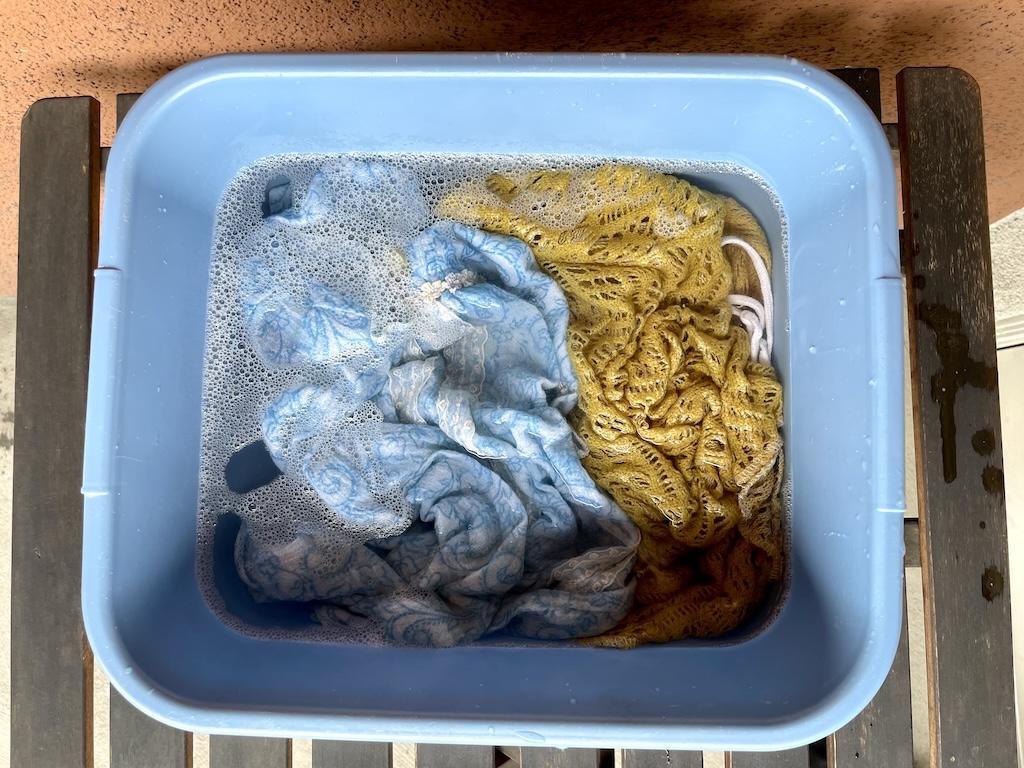
Then I let it soak for up to 30 minutes. Every few minutes, I’ll swirl the clothes in the water to agitate them gently.
5. Rinse out the detergent.

After soaking, I rinse the detergent. I’ll fill the sink with fresh water and swirl my clothes around.
Then I drain the sink and run the clothes under a stream of cold water.

My detergent suds up a lot. So when the suds are gone, I know the detergent is rinsed out.
6. Squeeze the water out.

I drain the sink and remove the excess water from the clothes by squeezing them gently. I do this over the sink or bathtub.
You’ll want to avoid wringing or twisting your delicates.
7. Repeat steps with softener (optional).

You’re going to repeat the above steps, 1 through 6. But instead of detergent, you’ll add fabric softener.
I marked this as an optional step because not everyone uses fabric softener. I used a teaspoon for this handwash, which is a little bit.
And you’re not supposed to use softener on fabrics with elastin or spandex. That’s why I said to look at the care instructions beforehand.
8. Lay to dry or on a rack.

Depending on the garment, I’ll lay it to dry on a towel or hang it on my drying rack. If it’s something that droops and may stretch out of shape, like this loose-weave top, I’ll lay it on a towel.
Materials for Machine Washing
- Washing machine
- Gloves
- Water
- Detergent
- Fabric softener
- Mesh laundry bag
- Drying rack
How to Wash Clothes by Machine

The clothes that don’t need to be hand-washed can go in the washing machine. I choose a delicate cycle or a regular wash with cold water.
My delicates washes include rayon, cotton voile, and silky fabrics because they don’t hold up well in a regular wash.
For regular washes, this may include medium-weight cottons, denims, and other knit and woven fabrics.
1. Turn clothes inside out.

I turn clothes inside out before washing. That way, the friction happens on the wrong side of the fabric, or inside the garment.
Also, be sure to zip up zippers at this point.
This is the point where I put on my latex gloves. You don’t have to put on gloves, but I do.
2. Put delicates in a mesh laundry bag.

I’ll put clothes that might tangle or get caught on the agitator in a mesh laundry bag. These come in different sizes and come in handy!
I wash my handmade rayon top with flutter sleeves and long ties in a mesh bag. If I don’t use one, the long ties get tangled around other clothes in the washing machine.
A mesh laundry bag also works well if you have any items with buttons or hooks. I put my headbands and other small accessories in them, too.
3. Place clothes in the washing machine.

I place the clothes in the washing machine. Mine is a top-loader, so I drop them in.
You’ll want to place them in loosely. Meaning, don’t cram them in and don’t overfill the machine.
On your machine, it should tell you the maximum you can fill it to. The fewer clothes I put in mine, the cleaner they come out.
4. Add detergent and softener.

There should be places where you can add your detergent and softener. My washing machine has a little tray that pulls out near the top.
I use non-allergenic detergent and softener in my wash. Use the recommended amount according to the load size.
The detergent and softener bottles should come with a measuring top and show you how much to use for a small, medium, and large load.
5. Add natural boosters (optional).

Sometimes I like to add vinegar and baking soda to the wash. These help boost the detergent.
That being said, I won’t use baking soda on dark colored clothes. However, I’ll generally add a cup of vinegar to each wash to really softner and enhance the color.
Don’t worry, your clothes won’t smell like vinegar when you wash with it. They should come out smelling fresh.
6. Close the top.

With the new machines, they won’t start unless you close the top. My old washing machine would run regardless.
7. Turn on the machine.

At this point, I turn on the washing machine by pressing the power button. It sings a little tune to let me know it’s ready to go and the panel lights up.
8. Set the dials.

Then I set the dials. My washer is configured to delicate wash or regular, depending on what I’m washing.
I always use cold water to avoid fading. I also add soaking to the cycle because I’ve found that my new high-efficiency machine doesn’t clean like the old one.
Plus, when using a delicate wash, it won’t agitate much. So, the soaking helps to remove dirt.
For spinning, I let them go on medium-normal. This usually doesn’t harm the clothes.
9. Press start.

Once I press start, the machine spins and weighs the clothes. Then knows how much water to add.
From this point, I wait for my wash to finish, which is about 1.5 to 2 hours. Time to catch up on some sewing in the meantime!
10. Remove clothes when finished.

When the machine finishes, you’ll want to open the lid and remove the clothes. The sooner, the better.
Don’t leave your clothes in the machine for days. They might get moldy or smell. You shouldn’t have to squeeze any water out, as the machine should have spun it out.
11. Hang dry clothes.

I like to hang my handmade clothes on a drying rack. Again, for your more stretchy or loose-weaved items, you can place them on a towel to dry.
Drying Handmade Clothes
For most items, I hang them on a drying rack. Try to keep them out of direct sunlight so they won’t fade.
Typically, rayon and other light fabrics dry pretty quickly. Pants and jackets may take a full day to dry.

Putting your knit clothes in the dryer can cause pilling, or tiny balls. I hang or lay them to dry to avoid this.
When I do put clothes in the dryer, I use low heat. High heat fades cotton fabric and can make clothes look worn out quickly.
I typically don’t dry my clothes all the way if I do put them in the dryer. I’ll put them in for 20 minutes and then hang them to dry.
Ironing Handmade Clothes

For my delicates, I use a warm iron with very little steam. I’m careful not to have the setting on too high.
I also use a pressing cloth or muslin to layer on top of delicates so they won’t melt or burn. Turn clothes inside out when ironing to avoid pressing marks.
Be careful when ironing clothes with elastin or different finishes. Sometimes, they will melt when ironing.
Additional Notes

Even before making your clothes, know that using poor quality fabrics may not hold up, no matter how carefully you wash them.
When I buy fabrics, I always take a picture of the end of the bolt where the care instructions are.
Also, you don’t have to wash clothes every time you wear them. You might go a couple of times before washing some items.

When I worked backstage in wardrobe, we used vodka to spray on clothes. It was a great way to freshen up the costumes between washes.
Always test a small piece of fabric before doing this. It hasn’t ruined any of my clothes thus far.
Final Thoughts
Not all people find it necessary to wash their handmade clothes with care. But I want to keep wearing mine, so that’s why I do it.
I know the amount of time and effort that’s put into making them. So, I definitely want to wear them out and about as long as I can!
More About Sewing
I have more related posts on my blog. You might want to check them out.
- Let me give you some tips for sewing clothes, from a long-time sewist.
- Would you like to learn how to fix a small hole in clothes without sewing?
- I’ll tell you what I look for when choosing a good iron for sewing projects.
- Have you thought about making clothes with quilting cotton? I’ll share my experience.
I’d love to hear about your sewing journey!
Originally published: December 16, 2024