Disclaimer: This post may contain affiliate links. As an Amazon Associate, I earn from qualifying purchases.
With all the different types of elastic for sewing out there, which one should you choose? Whether you make a garment from scratch or replace elastic, you’ll want to use the right kind.
From making clothes with elastic waistbands to lacey underwear, I use all different types. They don’t all look, feel, and behave the same.
I’ll tell you more about the types and how I use them when sewing. This should help you decide which kind to use for your project.
Different Types of Elastic for Sewing
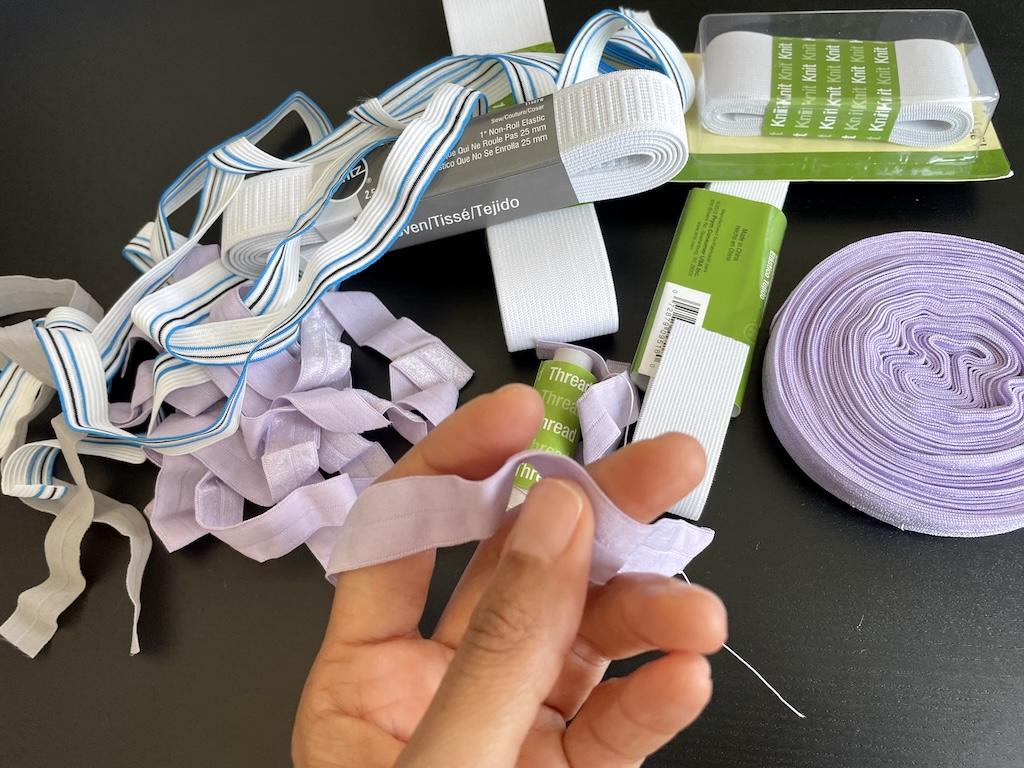
There are a few elastics to choose from, and it might seem a bit overwhelming in the beginning. If you choose the wrong kind, the garment may not look or feel right.
They come in different sizes, finishes, and colors. That being said, let’s dig through my stash and take a closer look at them.
1. Woven Elastic

One of the most durable and strong of the bunch is woven elastic. You can see the weaves and ribs in it.
It’s good to use for casings for medium to heavy fabric. It really keeps my garment in place and doesn’t roll.
I like to use non-roll woven elastic with heavy fabrics. It doesn’t stretch like some of the other types, however, the rebound is very good.
I used it for the back waistband of my denim mini skirt, and it holds very well. I’ve found this elastic lasts the longest out of all the ones I use.
2. Knit Elastic

When working with knit elastic, it has more give and is soft and flexible. You can see the loops, especially when you pull on it.
I like to think about a knit shirt that stretches with you. You can use this in casings with light to medium-weight fabric.
Knit elastic has a soft hold, which is very comfortable. You can also sew through it, which is nice when making rows on waistbands.
This is one of my preferred types to use for waistbands in light to medium-weight fabrics. However, I also use it for sleeve casings on blouses and leg casings on lightweight pants.
Knit elastic can also come with a nice finish, so it can be worn on the outside of garments too.
3. Braided Elastic

This type of elastic has braids, which look nice on the outside of garments. Look closely at braided elastic, and you can see them.
Not only can you use it on the outside of a garment, but also in casings. It’s not as stretchy as knit elastic, but more flexible than woven elastic.
It can be used with light to medium-weight fabrics. Surgical face masks typically have braided elastic straps.
Although it’s a very versatile elastic for fashion sewing, I don’t use it much for casings. When stretched, it narrows, which doesn’t work for many of the clothes I make.
But it does work well for accessories. I’ve used it with sleep masks and even swimsuits.
4. Sportswear Elastic

When you feel sportswear elastic, you’ll notice how soft it is. It’s meant to move with you when you’re active.
Think of spandex pants you’d wear while jogging or doing yoga. This type of elastic has an added hold with negative ease clothes and conforms to the body.
Oh, this is my favorite type to use for waistbands. It’s seriously comfy, if not the most comfy type!
If I run out of this type, knit elastic comes in close. Sports elastic has that nice soft feel that I like, so it’s my preference when making activewear.
Plus, if you look closely, you can see the channels. You can stitch right on those to keep it in place.
5. Ribbed Elastic

With ribbed elastic, you’ll get a great hold. It retains its shape, and you can see the ribs in it.
The only type of clothing it’ll use this one for is heavyweight fabric casings. Think jeans, canvas, or even corduroy.
With the ribs, it won’t move around. So you don’t have to worry about it rolling in the casing.
I don’t use it too often for clothing because of the rigidity. Typically, I don’t need this strong a hold, and I want more flexibility.
However, I have used this elastic with home decor, accessories, and in other projects, and it has worked well.
6. Fold-Over Elastic

This type of elastic folds over horizontally. You can see the line going down the middle where it folds.
Fold-over elastic can be used to finish off seams. I’ve used it on underwear and knit shirts.
It has a soft hold that’ll conform to the body. It helps keep a garment in place rather than holding it up.
You can find it in many different colors and weights. I like to dye it to match my project, and it works well.
I’ve also used this kind of elastic to make metal-free hair ties. Sounds like another blog post…
7. Underwear Elastic

When making undergarments, you might use underwear elastic. It comes finished and is meant to be shown.
You can sew it on with a zig-zag stitch right over the underwear. I have both lace and striped elastic.
This elastic usually has a soft hold and conforms to the body. It’s not too constricting and should feel comfortable.
If you’d rather use a casing on your underwear, don’t use this type of elastic. Use soft knit or braided instead.
8. Stretch Lace Elastic

Speaking of underwear, let’s look at stretch lace elastic too. I like to use this for panties and to finish knit garments.
It can be stitched right on the garment instead of using a casing. It has a nice stretch, but is soft and holds well.
I’ll use lace elastic to go around the waist and legs of underwear. You can use a thicker width for skirts and shorts waistbands.
I’ve also used stretch lace to make headbands, finish off sleeves, and hem shirts and dresses. It has many versatile uses for decorative sewing.
9. Bra Elastic

You’ll want to use this type of elastic when making bras and camisoles. It’ll come as a strap with a slider to adjust the strap.
Bra elastic is a heavier-duty soft knit elastic. After all, it needs to help hold things in place.
They come in many different colors and widths. Some even have lacey finishes and rhinestones.
I like to keep a few around as they come in handy when replacing straps or adding them to camisoles.
10. Elastic Thread

You’ll wind elastic thread on your bobbin and sew with it. Use it to make shirrings and smocking on garments.
This is done by gathering the fabric by sewing rows. It’s common with tops and dresses. I’ve also seen it used with home decor and accessories.
You’ll want to use elastic thread with lightweight fabric. If your fabric is too heavy, it won’t gather well.
It comes on spools and in different colors. I always keep this kind of elastic on hand because it’s easy to fix a garment that’s too big by adding shirring.
11. Clear Elastic

Well, clear elastic should be clear, but mine has turned colors. Anyway, it still works!
You can use it to stabilize knit seams. If you’re making knit tops, you can sew this kind of elastic right in the shoulder seam so it won’t stretch.
You can also use it to stabilize and finish around necklines and wrists. Any knit fabric that might stretch out should be stabilized so it won’t stretch out.
I use it most frequently when gathering knit fabrics with elastic. You may see knit elastic used for this, but I like using clear elastic because it’s nice and thin.
Additional Notes

When using a sewing pattern, it may suggest which width of elastic to use. It may not get into the specific type.
I’ve figured out my elastic preferences through a lot of trial and error. It might be cumbersome, but you can always remove the elastic if you don’t like it.
Once you start using the different types, you’ll figure out the ones that work best for you. For example, you might like using woven elastic for skirt waistbands, while I prefer a softer hold.
While soft knit elastic is more comfortable around the waist, non-roll woven has a more rigid hold for heavier fabrics.
I keep many different types and colors of elastic in my stash. When sewing a lightweight fabric, I try to match the color so it won’t show through the fabric.
Final Thoughts
With so many different elastics to choose from, you’ll never run out of options. Using the right one will give you support and comfort where you need it.
And when sewing a casual wardrobe, we surely want that. Now you’ll be able to make some wonderful garments.
More About Sewing
I have many other related posts on my blog. You might want to check them out.
- Now I’ll tell you about the types of waistband elastic I use for a comfy fit.
- It’s time to learn how to put elastic in a casing, and I’ll show you how.
- Would you like to know how to wash handmade clothes, including ones with elastin?
- I’ll show you how to fix a small hole in your clothes, the no-sew way.
I’d love to hear all about your sewing journey!
Originally published: June 26, 2025