
Disclaimer: This post may contain affiliate links. As an Amazon Associate, I earn from qualifying purchases.
One thing that extends the life of my handmade clothes and delicates is washing them by hand. I have many that just don’t hold up in the washing machine.
The process of filling a tub, adding soap, and soaking might take a little labor, but it’s worth it. It’s easy to do, and I’ll share how I do it step-by-step.
Plus, I’ll give you some notes about drying and ironing. So without much ado, let’s get going!
Materials
- Small bucket, tub, or sink
- Gloves
- Water
- Detergent
- Fabric softener
- Drying rack or towel
Notes on Sorting Clothes

Before washing, we’ll need to take a look at the fabric and sort the load.
You’ll want to look at the care instructions. If you made the garment, this was on the side of the bolt when purchasing fabric or in the description online.
Some materials need to be dry-cleaned only. So, this method will not work for those clothes.
I always separate clothes by lights and darks. Wash similar colors together.
That way, any residual dye from dark clothes won’t come off on the light ones.
Washing Handmade Clothes by Hand Tutorial

I handwash the delicates I’m most worried about. These include lingerie, lacey and sheer tops, and loose-weave sweater fabric.
Overall, my method is pretty gentle but gets things clean. You won’t use a washboard or any scrubbing tools.
1. Fill a small tub with water.

First, I’ll fill a small tub with cold water. You can also use a bucket or the sink. If you use the sink, use the stopper or plug to keep the water in.
I usually wear latex gloves—the same kind you’d use for washing dishes. Using gloves is up to you, but I don’t dip my bare hands in detergent.
2. Add detergent.

I like to use a non-allergenic, unscented, gentle detergent. The one I use is Forever New, which is concentrated.
I add about a teaspoon to the tub and mix it into the water. You don’t need much if you only have a couple things to wash like I do.
3. Add the clothes.

You can put your clothes in the tub now. I swirl them around and make sure they’re covered in water.
4. Let them soak.
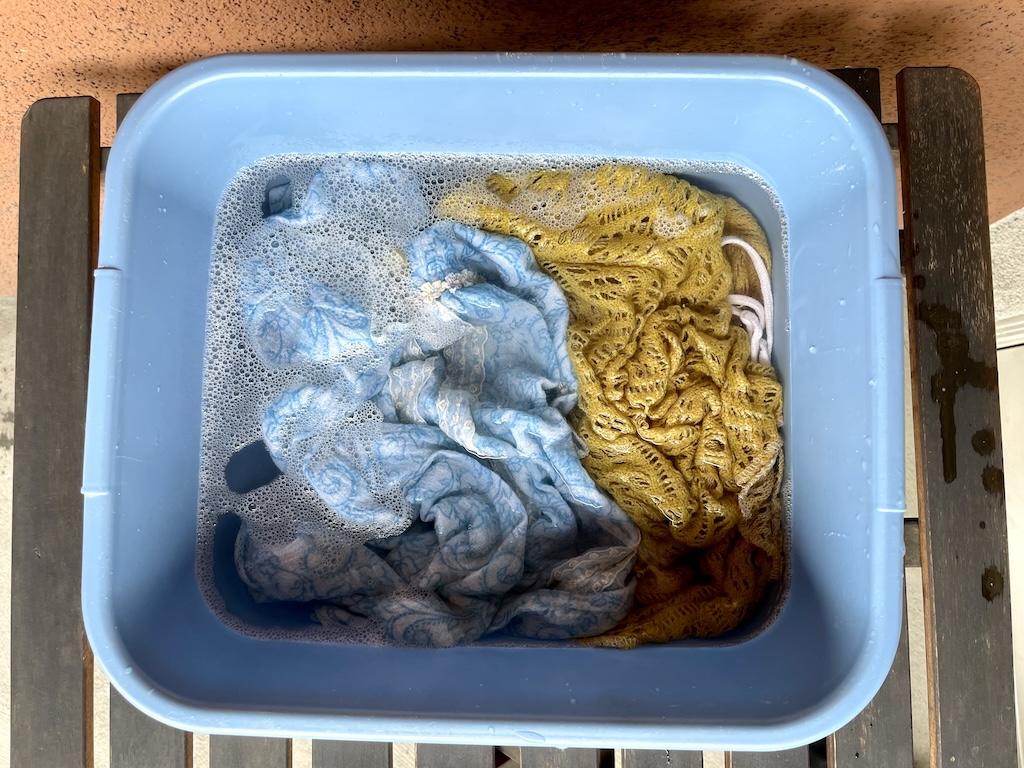
Then I let it soak for up to 30 minutes. Every few minutes, I’ll swirl the clothes in the water to agitate them gently.
5. Rinse out the detergent.

After soaking, I rinse the detergent. I’ll fill the sink with fresh water and swirl my clothes around.
Then I drain the sink and run the clothes under a stream of cold water.

My detergent suds up a lot. So when the suds are gone, I know the detergent is rinsed out.
6. Squeeze the water out.

I drain the sink and remove the excess water from the clothes by squeezing them gently. I do this over the sink or bathtub.
You’ll want to avoid wringing or twisting your delicates.
7. Repeat steps with softener (optional).

You’re going to repeat the above steps, 1 through 6. But instead of detergent, you’ll add fabric softener.
I marked this as an optional step because not everyone uses fabric softener. I used a teaspoon for this handwash, which is a little bit.
And you’re not supposed to use softener on fabrics with elastin or spandex. That’s why I said to look at the care instructions beforehand.
8. Lay to dry or on a rack.

Depending on the garment, I’ll lay it to dry on a towel or hang it on my drying rack. If it’s something that droops and may stretch out of shape, like this loose-weave top, I’ll lay it on a towel.
Drying & Ironing Delicate Clothes

For many delicate items, I hang them on a drying rack. Try to keep them out of direct sunlight so they won’t fade.
Typically, rayon and other light fabrics dry pretty quickly.

I use a warm iron with very little steam. I’m careful not to have the setting on too high.
I also use a pressing cloth or muslin to layer over delicates so they won’t melt or burn. Turn clothes inside out when ironing to avoid pressing marks.
Be careful when ironing clothes with elastin or different finishes. Sometimes, they will melt when ironing.
Notes

Even before making your clothes, know that using poor quality fabrics may not hold up, no matter how carefully you wash them.
When I buy fabrics, I always take a picture of the end of the bolt where the care instructions are.
Also, you don’t have to wash clothes every time you wear them. You might go a couple of times before washing some items.

When I worked backstage in wardrobe, we used vodka to spray on clothes. It was a great way to freshen up the costumes between washes.
Always test a small piece of fabric before doing this. It hasn’t ruined any of my clothes thus far.
I know how much time and effort goes into making them. So, I definitely want to wear them as long as I can!
Read More
