
Disclaimer: This post may contain affiliate links. As an Amazon Associate, I earn from qualifying purchases.
Are you wondering if you should use fabric swatches as a home sewist? After creating the tutorial, I brainstormed some questions you might have about them.
You can use them to learn about different types of fabrics and plan projects. Learn the best way to organize them for your needs.
So, without haste, let’s get to the Q&A, with answers based off my experience!
1. Why would I make swatches as a home sewist?
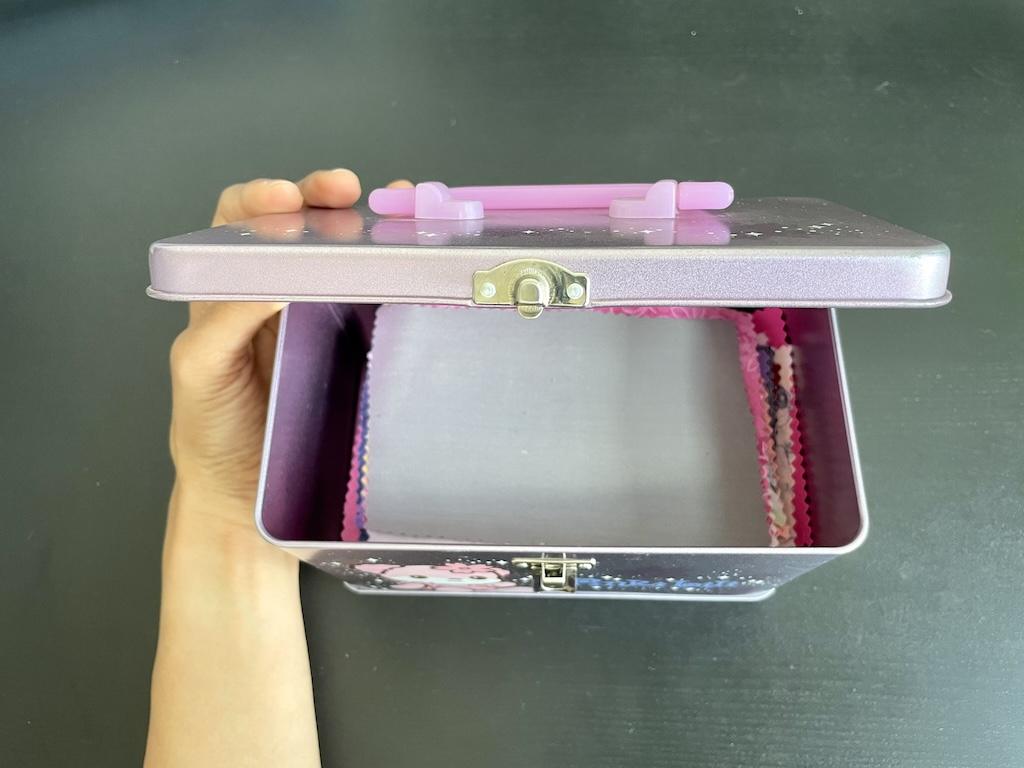
If you have a big stash like I do, fabric swatches can help you stay organized. You can use them as a catalog for your fabric library.
If you’re a beginner, you’ll also learn about different fabrics this way. As you create your swatches, you might notice the textures of similar fabrics.
For example, you’ll notice that many cottons feel similar. However, you’ll notice differences in weights as some might feel lighter, and others softer.
I have quilting cotton, voile, twill, denim, chambray, and shirting. These are all cottons, but I can see and feel the differences right away.
So I can quickly decide if I should make my new blouse in shirting or voile.
2. Should I collect all the different fabric types?
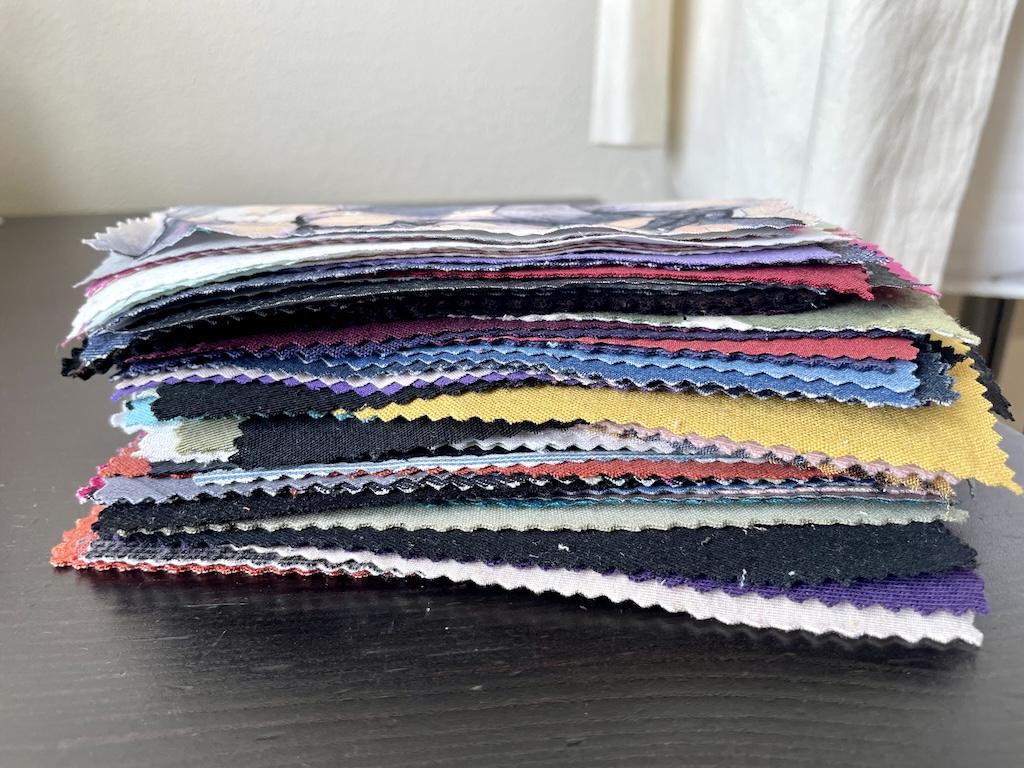
I’m not saying you need to go out and buy all the different types of fabric to have them in your index.
But the more different types you have in your library, the better you’ll understand the hand (how it feels) and drape (how it hangs).
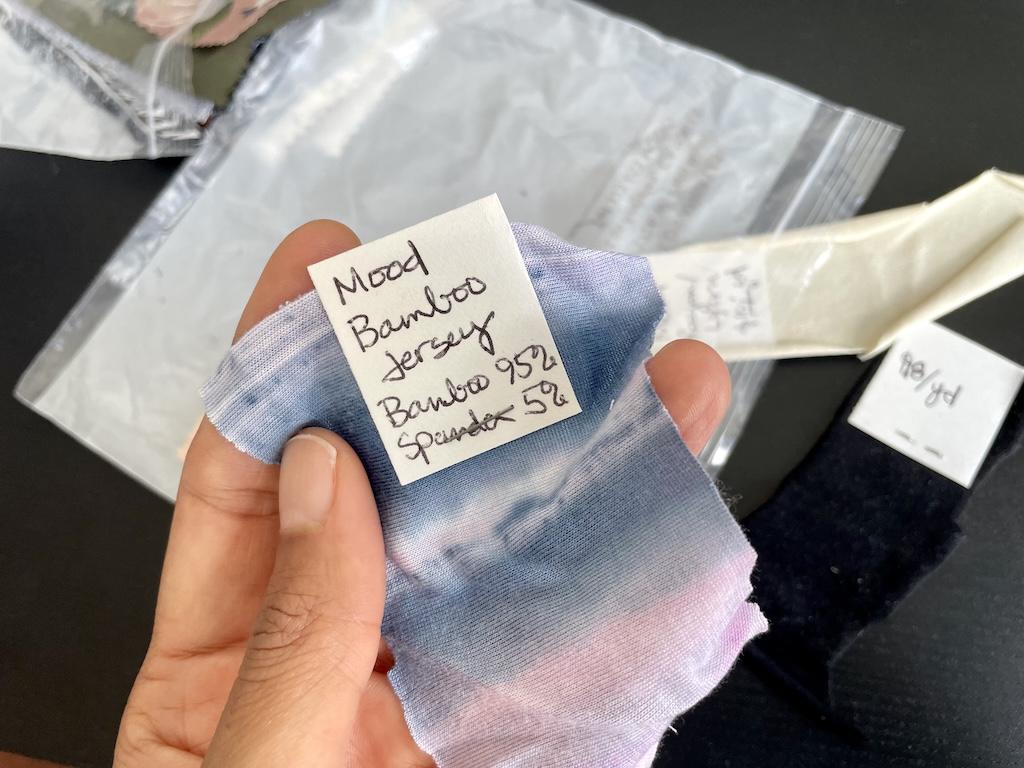
I like to order swatches of fabric I don’t have. They are generally cheap, costing around $1 to $4.
That way, I’ll know what the texture and weight are like. For example, you might sew with woven fabrics as a beginner.
If you want to get into sewing knits, you might order some fabric swatches beforehand.
You could add cotton knit, polyester knit, modal, lycra, rayon, bamboo, sweater knit, double knits, scuba, and more.
Then you’ll know they feel and stretch before buying yards of it.
I tend to buy all-natural and semi-synthetic fabrics since that’s what I sew with. But I do have polyester swatches just for comparisons.
3. How would you plan projects using fabric swatches?
If you like fashion sewing, you might use commercial patterns. Before making a garment, I look at the suggested fabrics, usually listed on the envelope.
Let’s say it says you can use silky types, crepe, chambray, linen, and lightweight denim to make a garment.
You could pull those swatches out and lay them on your table. Then you could feel them, hold them up to the light, and compare them.
I like to do this because it’s easier than pulling out a whole roll of fabric from my closet.
Then I might recall making a garment with a certain fabric and think about how it worked, and would like to use it again.
I might compare a linen to silky fabric and realize the drapey one is more of what I’m looking for.
After deciding between swatches, I’ll go and grab that fabric roll out of my stash.
4. Does this work for all fabrics?
Yes, you can pretty much swatch any fabric.
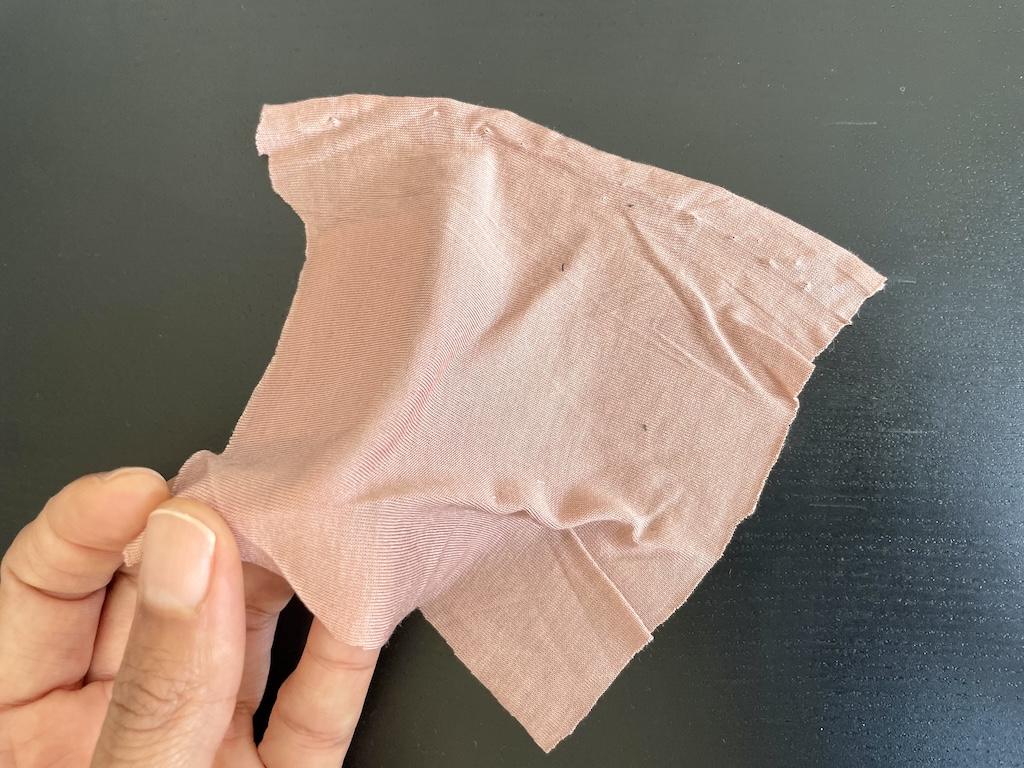
But some might not lay nicely like woven cotton. For example, I have some knit rayon that just flops around.
It doesn’t lie straight, I can’t write on it, and it’s just very drapey.
For these kinds of fabrics, I like to keep them in a plastic bag. They might not keep their shape or may roll at the edges, unlike the fabrics with more structure.
I still keep them with my other swatches, but they tend to be separate.
5. How should I organize my swatches?

Speaking of separating them, you can organize them in a certain way. Some people love to do this by color or type.
I mostly organize by type of fabric. For example, I keep my cotton wovens together, and then polyesters in another heap.
Then, as I mentioned before, many of my drapey knits go in a little baggie.
You could also organize them by seasons, where you separate your summer, spring, winter, and fall colors.
If you’re a quilter, you might want to organize your swatches by the patterns and colors that go well together.
That way, when you’re making projects, you’ll have them in coordinating sets.
6. How should I store my swatches?
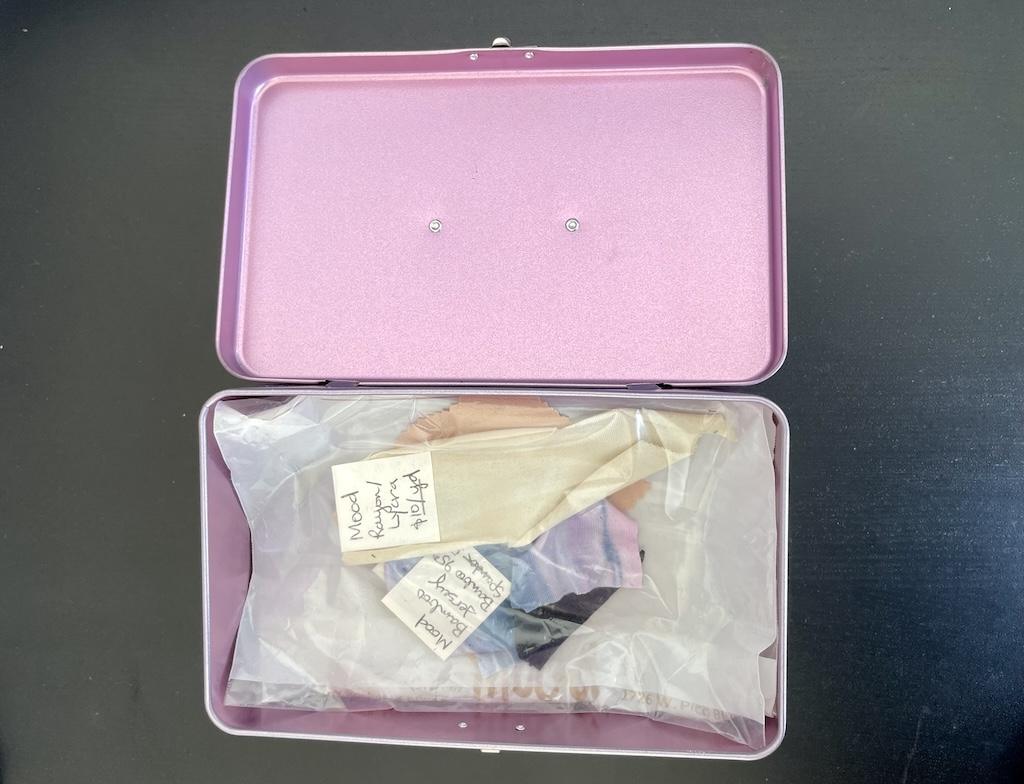
You can store swatches in different ways. Some storage ideas include using a shoe box, basket, or plastic container.
I put mine in a metal container,stacking them in a pile. This way, I can shuffle through the swatches.
Many people like to make binders or books. You can staple or glue the swatches to cardstock. Then punch the cardstock and insert the pages into the binder.
I’ve also used plastic sheets that you’d use to store trading cards. This doesn’t work as well because you’ll want to feel the fabric.
You might go to fabric stores to see how they store theirs for more ideas.
Notes
I know I spoke about buying swatches, but did you know that some stores will give you free ones? Yes, I get them all the time!
I live by Mood Fabrics and love browsing the aisles. If you like something, just ask for a swatch, and they’ll cut you one.
By the way, I’ve seen people bring scissors and cut their own, but you don’t want to do that. Ask, and they’ll do it for you!
Read More
