Disclaimer: This post may contain affiliate links. As an Amazon Associate, I earn from qualifying purchases.
If I were starting over as a beginner, there are some good sewing supplies I’d get. When I started as a child, I certainly didn’t have all the fancy shiny objects.
But having the right tools from the get-go will be helpful as you navigate this new hobby. You’ll need to measure, cut, mark, sew, press, and more.
I’ll share what I’d get and what these things are used for. This may help you know what you’re getting into and exactly what to buy.
Basic Sewing Supplies for Beginners
Although I’ll walk you through what these tools are, a good sewing teacher could show you exactly how to use these things properly.
1. Sewing Machine

I thought I’d start with the most expensive purchase when you start sewing—the almighty sewing machine.
Anyway, you might want a sewing machine… And I say “might” because you could hand-sew everything too.
Anyway, this will be the tool that will put stitches in your fabric, and it’s much faster than doing it by hand. You’ll have to learn how to use it though.
You can buy machines for less than $200 in the store. You can also find used machines online and in thrift stores.
No matter how you get a sewing machine, make sure it works. I know someone who bought a cheap used machine, but it always choked up.
As you would guess, that person got very frustrated. If your machine does not work properly, this may sway you away from sewing.
If you go to a family-owned store, they can show you how the sewing machine works and let you go for a test drive. Be sure to look around and ask plenty of questions.
2. Measuring Tools

You want to have some things to measure your body and fabric. This includes a measuring tape, ruler, and sewing gauge.
The measuring tape is flexible to measure around curved body parts. You will use it around your bust or chest, waist, and hips.
Depending on what you’re sewing, you might also need to find your neck, shoulder width, crotch length, and arm and length length.
When I first started sewing, I got by with just a measuring tape. In time I got a ruler, sewing gauge, and yardstick.
I use the ruler and seam gauge to mark hems and sewing lines. They’re also good for transferring markings from patterns and making adjustments.
I also use a yardstick for bigger projects. When I pattern skirts and bench cushions, I need to draw long lines.
3. Marking Tools

When I first started sewing, I used a dressmaker pencil and tracing wheel. They worked just fine for the cotton fabric I was sewing.
But as I got more into sewing, I started buying water-soluble fabric markers or disappearing ink markers. I also bought a tub of tailor’s chalk.
Whatever your preference, you’ll need to mark on the fabric. I like to mark my pattern piece number and transfer my pattern markings onto the fabric.
I use a tracing wheel and tracing paper to transfer markings off the sewing pattern, such as darts and fold lines.

You’ll also want to mark other things, such as buttonholes and placement symbols. This will help you keep everything lined up as you sew.
Make sure your markings wash off your fabric. You don’t want to sew up a nice dress or jacket with permanent markings all over it.
Once, I used some tailor’s chalk on my rayon blouse. When I washed it, the chalk did not wash out!
Also, I used a water-soluble fabric marker on sateen fabric that took forever to remove. So, make sure you test it on some scrap fabric beforehand.
4. Seam Rippers

The seam ripper is a tool I use all the time, and one you’ll need! It’s just as important as the needle and thread.
I use mine all the time because mistakes are inevitable! No matter how long I have been sewing, I still make mistakes.
Or I change my mind about things and upcycle outfits. That’s where the seam ripper comes in handy.
I use different kinds of tools to deconstruct garments. Depending on the fabric and the garment, I know what will work best.
But I’d start out with a basic one that you can use to pick your seams open. I always misplace mine, so I have a few in my stash.
5. Pins

I use a lot of pins, especially straight pins. You use these to hold the fabric together.
I like to pin my pieces together before sewing. This keeps the fabric lined up as I sew.
Depending on the material, I use different kinds of straight pins. I have some for knit fabric, woven, lightweight, and heavy.
I prefer the 1-inch pins with the ball on the top.
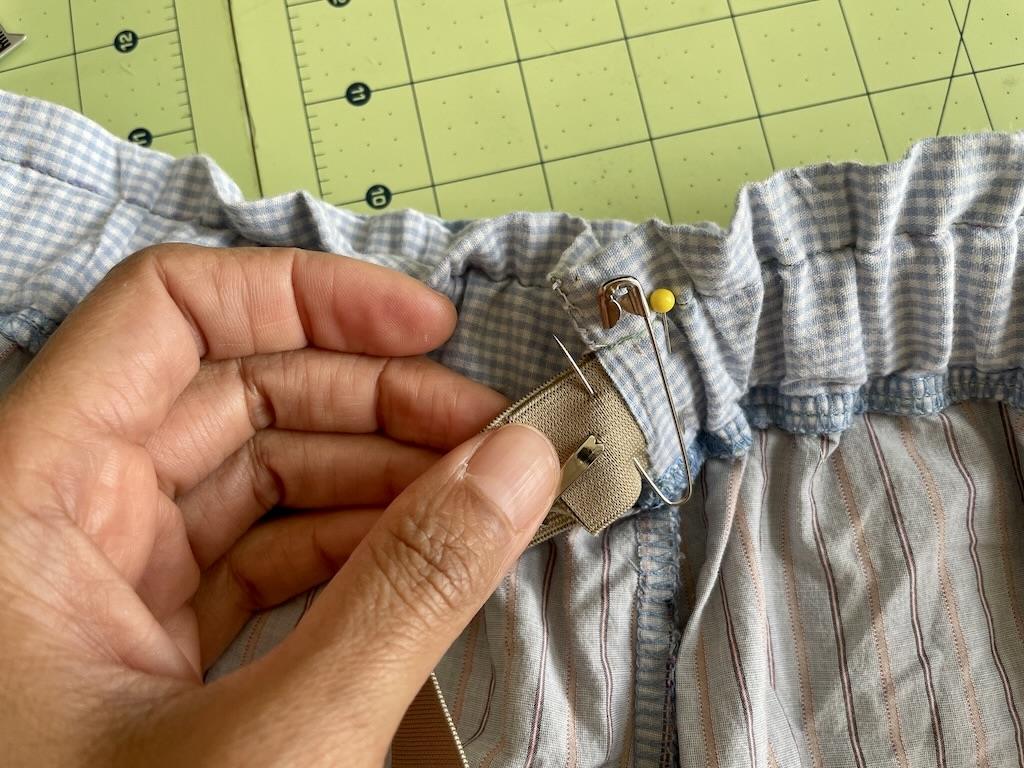
While we are on the topic of pins, you might want to get some safety pins, or baby pins.
These come in handy when trying on an outfit and closing it for fit. Also, they are great for pulling elastic through a casing.
I always carry a couple in my purse in case of a broken zipper or popped button.
6. Cutting Tools

Most fabric stores carry different kinds of cutting tools. I have a few different scissors and rotary cutters.
When I first started sewing, I only used fabric scissors to cut. You want to invest in some good scissors.
Don’t use the same scissors that you use for cutting paper. Keep these separate.
Much later in my sewing journey, I bought a rotary cutter and cutting mat. This made cutting fabric so much easier and faster.
This is something I wish I had gotten much earlier.
7. Fabric

You’ll definitely need fabric, or material when you start sewing. And if you don’t have any, look for old bed sheets.
I’d use medium-weight cotton woven fabric to start. This will be the easiest type of fabric to sew on when you’re beginning to sew.
If you go into the craft store, you’ll find a variety of cotton fabrics with all sorts of designs. I started on quilting cotton and broadcloth.
You might start out sewing a simple tote bag, hair accessories, or even easy shorts.
I made a blog post about the kinds of clothes you can make with quilting cotton. You might want to check that out, too.
8. Thread

There are many kinds of threads, so you’ll have to choose the correct one for your project. If you are hand sewing, you could use cotton thread.
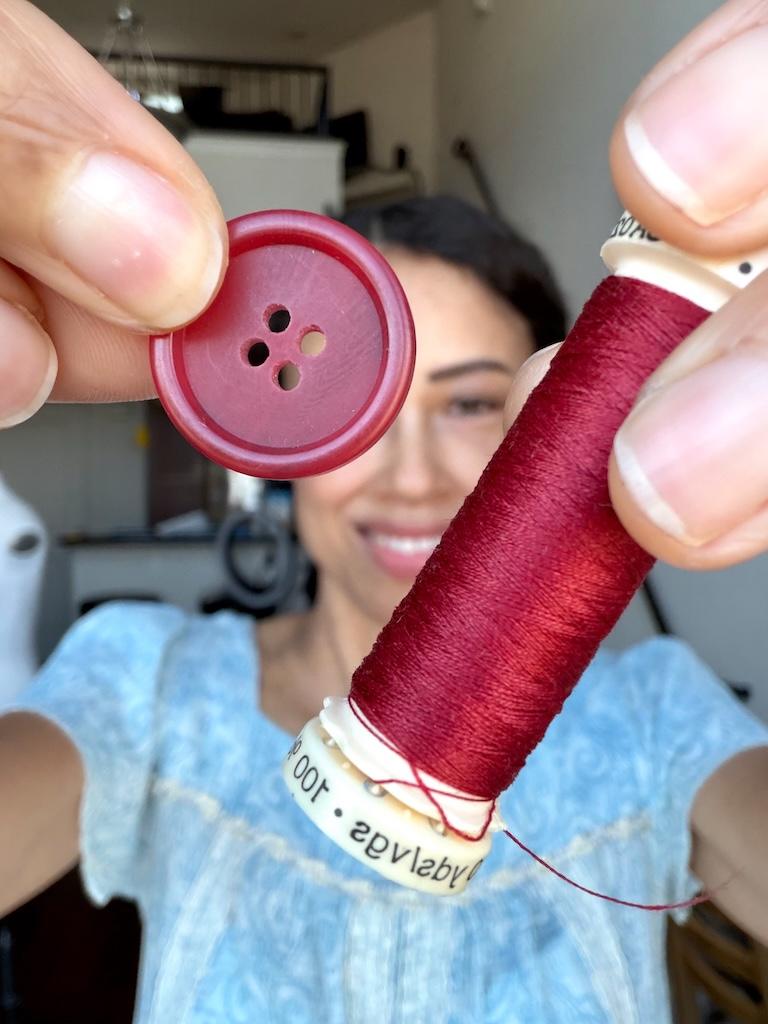
If you use a sewing machine, you’ll want to use a thread your machine can handle. I use an all-purpose 100% polyester thread.
Polyester thread does not fade and can be used with various sewing projects. I use Gutterman and Mettler thread because they work well in my sewing machine.
Coats and Clark thread worked fine in my old sewing machine. Oh, how I miss my old Singer sewing machine!

All of these brands carry a variety of colors. Will you match your thread to the fabric or choose a contrasting color to make it pop?
Thread also comes in different types for light to heavy fabrics. Once you get into sewing, you’ll learn about thread for sewing lingerie, knits, and topstitching.
Beware of really cheap threads on the market. Although they may save you money, they tend to shred and break easily.
This may frustrate you! So you do want to invest in quality thread.
Once you sew with different brands, you’ll find the one you prefer and works best for you.
9. Sewing Patterns

There are many different kinds of sewing patterns on the market. You’ll find both digital patterns and tissue paper patterns.
I wrote blog posts on working with each, so you can visit those to get an idea before cutting into them. You can buy sewing patterns in fabric and craft stores and online.
I started with the commercial patterns because they are very accessible. You can also get them on sale and save money.
When you start sewing, you’ll want to look for beginner-friendly patterns. Some pattern companies will label them as such.

Don’t confuse easy-to-sew with beginner. Just because a sewing pattern is easy to sew doesn’t mean it’s for beginners.
I have plenty of knit patterns labeled easy-to-sew, but I wouldn’t recommend them for beginners.
Start with projects that interest you. If you want to start fashion sewing, try making a tote bag or hair accessories.
Then, work your way up to making shorts or a skirt and, eventually, more challenging projects.
10. Weights

Why yes, I have weights in my sewing room. I do reps on my breaks.
But these aren’t the kind of weights I’m referring to. When cutting fabric, you want something to hold down your pattern pieces.
You can buy pattern weights or sewing weights. Or you can use washers from a home improvement store.

I use actual weight bars that I took out of my ankle weights. They work perfectly.
Sometimes, I use whatever is around me to put down the pattern. I’ve used canned food and office supplies on my desk.
We can get creative, right?
And you can always pin your sewing pattern to the fabric instead, but I prefer using weights.
11. Sewing Needles

You’ll need needles for both hand and machine sewing. They’re sold in packs of various sizes and types.
For machine sewing, I use a 12-point needle on medium-weight cotton woven fabric. You’d use a universal needle for this type of fabric.
As you start sewing on other materials, you’ll need different sizes. I know… there’s a lot to know right now.
I use smaller needles for lightweight fabrics, ballpoint needles for knits, and other needles for topstitching and heavier fabrics. Let’s worry about those later…
For hand sewing, I just buy a pack. They usually have various sizes in one pack.
12. Iron and Ironing Board

If you do your own laundry, you probably already have these items. If not, you’ll need a good iron and ironing board.
Pressing as you sew is essential!
When I sew, I set up these things right next to me. I constantly go back and forth between the sewing machine and iron.
Many fancy irons are on the market, and I have my phases with them. I wrote a blog post on choosing an iron.
My current ironing board is from a department store, and it wasn’t pricey either. Just make sure it’s sturdy.
Mine works, but I’ll probably upgrade my ironing board and iron one of these days. When I get some extra money…
13. Notebooks

Notebooks come in handy to take notes. I have a notebook, binder, and sketchbook for sewing.
I had the bad habit of writing sewing notes on scrap paper. Then they’d end up in the trash.
When I take notes or do the math for one sewing project, I may need to return to my notes much later. I mean, years later…
Keeping my sewing notes in one place helps me stay organized. I know people who like to write their sewing notes in a planner.
I also keep sewing pictures, inspiration, ideas, and more notes on my computer. Use the method that works best for you.
Additional Notes

Ask around. You might have a friend or family member who once sewed and no longer wants their sewing supplies.
That’s how I ended up with mine in the beginning.
When I started sewing, I got by with the bare minimum. However, I gradually added more supplies that really came in handy.
This was over time.
Don’t feel like you have to buy every new gadget you see in the store. Trust me, my sewing room is filled with many more supplies than are on this list.
This is just the beginning. Once you advance, you’ll see the need for more cool sewing tools and supplies.
Final Thoughts
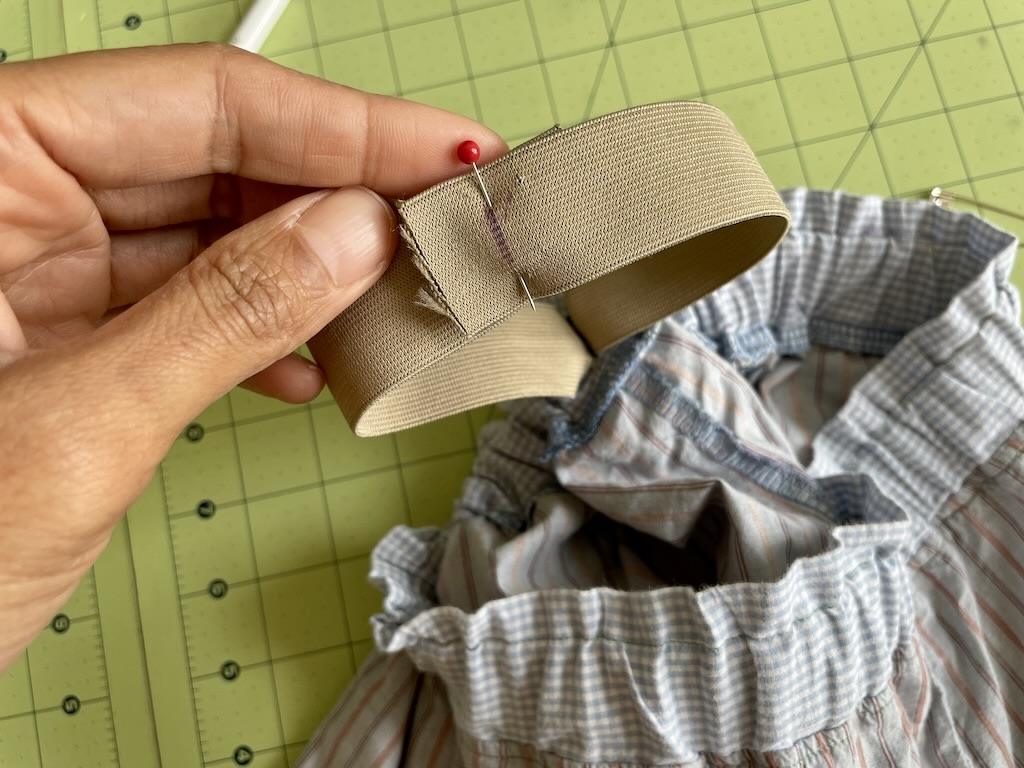
I didn’t start out with all these supplies at the very beginning, and learned to add them eventually. It may seem like a lot, but as you sew, you’ll see why they’re needed.
Hopefully, you can get a good deal on these things, or at least find them on sale. Be sure to check around with friends and family for anything they might give away!
More About Sewing
I have more related posts on my blog. You might want to check them out.
- What are the great reasons why you should learn to sew?
- Would you like to know where to learn to sew, including places you might not expect?
- I did a deep dive into the clothes I’ve made with quilting cotton—what worked and what didn’t.
I’d love to hear about your sewing journey so far!
Originally published: March 29, 2025