Disclaimer: This post may contain affiliate links. As an Amazon Associate, I earn from qualifying purchases.
Are you like me and are allergic to fabrics or textile dyes? Well, I know firsthand that they’re not fun and nothing to sneeze at.
Trust me, I’ve got some of the worst. And it doesn’t help that I sew, which puts me right in the trenches with lint and fibers.
I’ll tell you about my allergies and symptoms, and share tips on sewing with them.
Disclaimer: This post is based on my personal experiences and is not medical advice. I am not a doctor. Please consult with your healthcare provider for any questions about your specific allergies or health conditions.
My Allergies and Symptoms
I’ve always had allergies since I was a baby. So, this is nothing new to me.
I react to pollens, weeds, trees, grasses, mold, dyes, perfumes, dust, fur, feathers, and some foods. I’m so lucky, right?
I take medicines and get allergy shots. It’s just something I have to deal with.
For the most part, they are under control. Living in the West, the spring brings blooms and doom for me.
For about four months, I have seasonal allergies. That’s when they really kick up.
Any little exposure sends my system into full gear. And I’m left sneezing and coughing like crazy.
Allergies to Fabric

My seasonal allergies have been tapering off. However, in the last couple days, I thought I was coming down with something.
It started with a headache—and I rarely get headaches. Then my nose bled a lot.
Then, my eyes itched and swelled up. I sneezed, coughed, and got a sore throat. Overall, I felt malaise.
And then I remembered. For the last couple days, I had been working on upcycling these old store-bought pants.
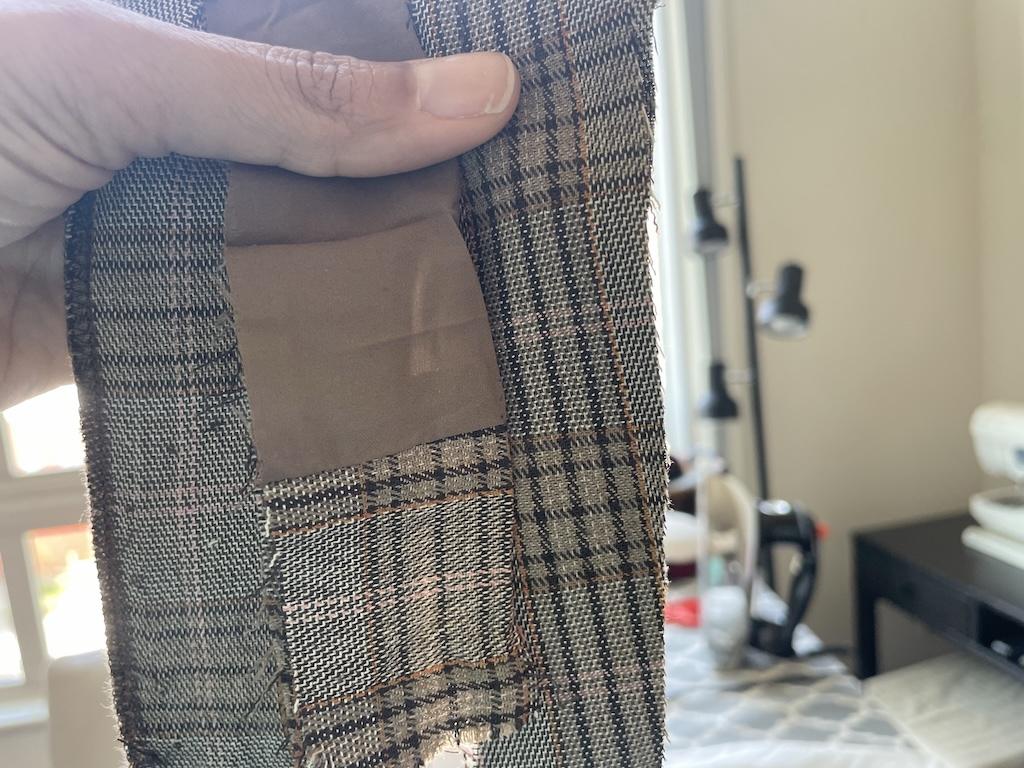
I deconstructed the seams, cut out the pattern, sewed, and serged them. When I serged the seams, that’s when my symptoms increased.
That’s when I felt really sick. Using the serger kicks up lint and fibers like nothing else.
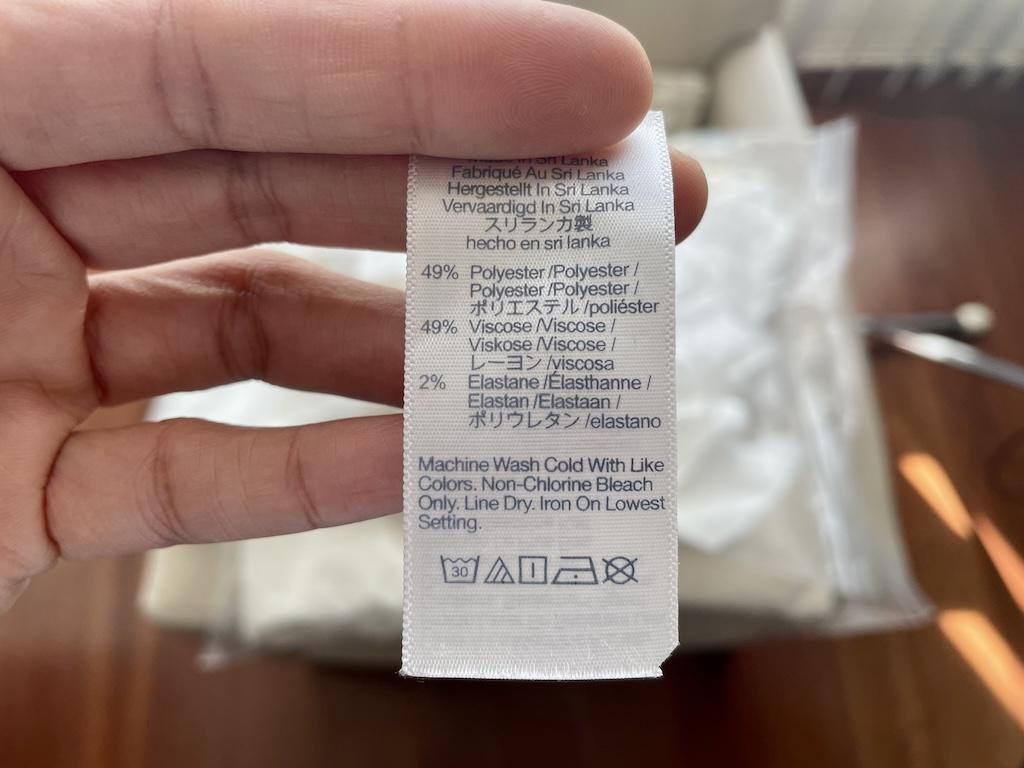
I checked the tag on the pants—49% polyester, 49% viscose, and 2% elastane.
Yup. It was the poly.
Issues with Polyester
I didn’t check the materials before sewing. The pants didn’t feel like natural fibers, but I didn’t think about it.
Most of the fabrics in my stash are made of natural fibers like linen and cotton. But I also sew with rayon, or viscose, because I tolerate it.
Rayon is made from tree pulp, so it’s natural but processed like a synthetic fabric. I’d called it semi-synthetic.
It works when I need a silky fabric for a nice breezy drape to make a blouse, skirt, or dress.
But polyester… I forgot about my issues with it! I got too excited about reinventing these pants.
Years ago, I discovered my polyester allergy when a store near me started selling deadstock fabric. Naturally, I bought a lot of it because of the low prices.
Before that, I pretty much sewed with cotton wovens and knits. I had no issues except the lint made me sneeze sometimes.
But as I started cutting and sewing the polyester fabric, I developed a cough. My face broke out into red welts, and my eyes swelled.
It was winter, so I thought I was coming down with something. Or, I just thought allergy season was coming early.
Textile Dyes Make Me Cry
It was difficult to pinpoint my polyester allergy because I dealt with many materials at that time. I’d make a dress with cotton and then make pants with polyester.
And I can get delayed reactions, so they don’t always happen right away. But the more I handled polyester, the more symptoms arose.
Then, I used some fabric dye on a dress. It made me sneeze and gave me a headache.
This happened suddenly, so I could pinpoint the reaction. And it made me think that I was allergic to fabric dye.
The darker dyes bothered me way more than the lighter colors. When I used dark blue or black, my system would go into overdrive.
If I used pink or yellow, I didn’t have much of a reaction. How strange…
Then, I thought about the times I sewed polyester fabric. My symptoms were worse when I worked with dark colors.
On the other hand, I don’t get much of an allergic reaction when I sew with dark cotton fabrics. I upcycle a lot of old jeans and use new denim as well.
The Ol’ Mixed Materials
Whatever the case, I must remember not to mess around with polyester. It’s in so many materials.
Manufacturers often blend it with natural fabrics. Polyester retains colors and prevents fabric from wrinkling.
It has great properties, but my system doesn’t like it. When you have fabric allergies, you need to select your materials carefully.
Be sure to check the tags or bolt ends for the contents. When shopping in fashion districts, I find many fabrics without labels.
Although I can guess the contents of a fabric, sometimes it’s difficult to tell. One store did a burn test for me.
When thrifting or upcycling clothes, check tags. For the most part, if I’m unsure of the contents, I’ll just skip it.
Tips on Managing Fabric Allergies

There are things I do so I can keep sewing, despite my reactions to fabric and dye. These might help if you have similar issues.
1. Wear a mask and safety glasses.
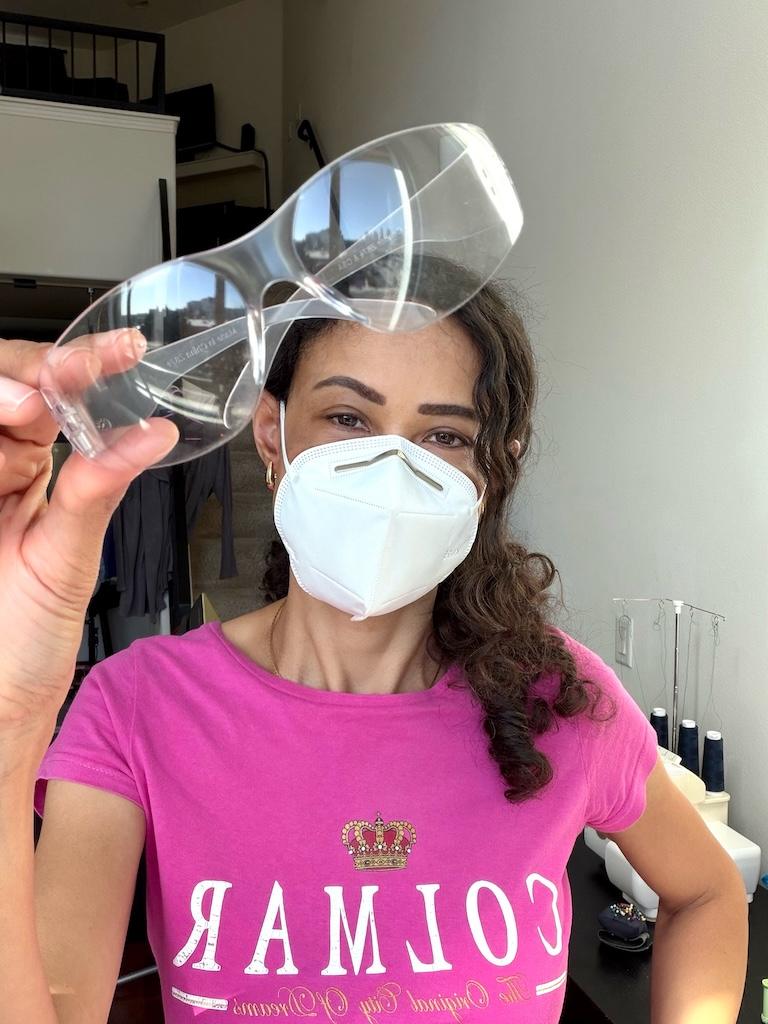
I often wear an N95 mask when serging problematic fabrics. I may also use safety glasses or goggles. It may look like overkill, but at least fewer fibers go into my system.
2. Vacuum often.
Lint can really kick up when cutting fabrics and sewing. I have black furniture, and you should see the coat of lint on those things just after cutting.
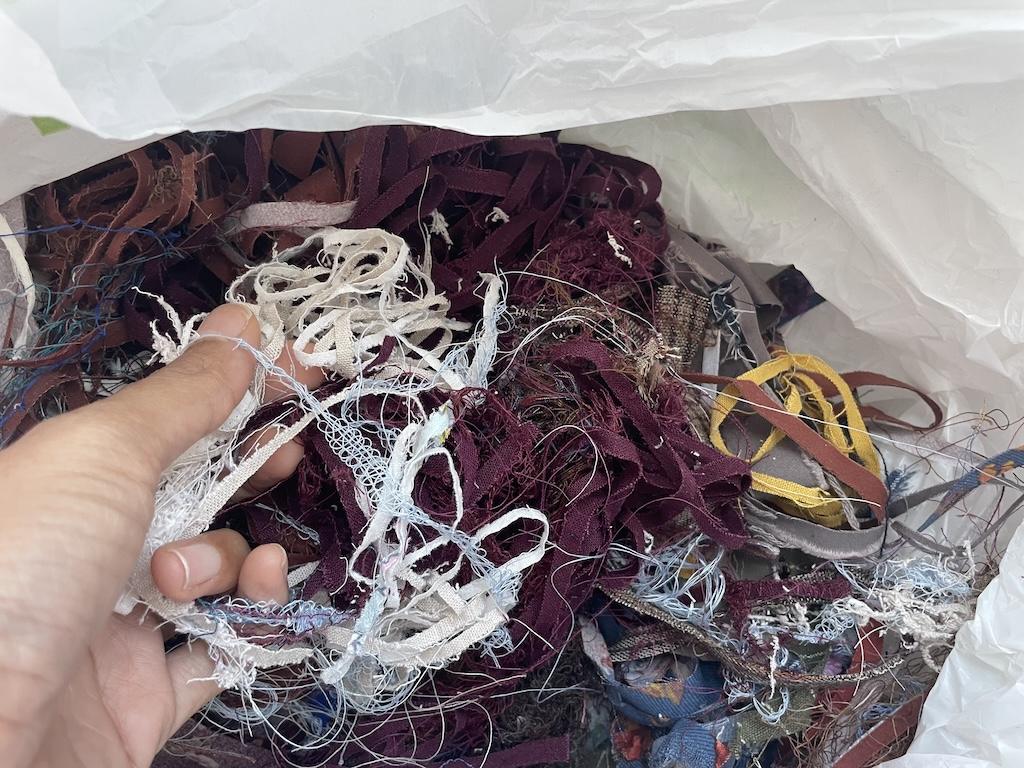
Serging will definitely toss fibers and lint in the air. I try to keep my vacuum hose next to the serger to suck up as many fibers as possible.
3. Don’t sew in the bedroom.
My sewing room is not where I sleep, which is key. My allergist had told me to try to keep the bedroom as dust-free as possible.
When handling fabrics, I run an air filter and ventilate by opening my windows. If it’s during peak allergy season, I may have to hold off on sewing until my allergies settle down.
4. Wash the fabric before sewing.
Regardless of allergies, I always wash my fabric before cutting. In fact, I keep it in the bag until I’m ready to wash it.
Fabric stores are full of lint, dyes, and other allergens. I can smell it in the air.
There’s a reason I might not react to dark denim fabric dye. I soak and wash it a couple times before cutting, so much of the residual dye comes off.
5. Stick with fabric you can tolerate.
Most of all, I stick to natural materials. They won’t kick up my allergies as much, so I can sew in peace.
However, some people have problems with natural fibers too, so stick to fabrics you can tolerate. I’m highly allergic to down feathers.
If I think I’ll have issues with something, I’ll avoid it. But mistakes happen—like these pants I forgot to check.
And yes, I finished my sewing project. Literally teary-eyed!
Read More
