Disclaimer: This post may contain affiliate links. As an Amazon Associate, I earn from qualifying purchases.
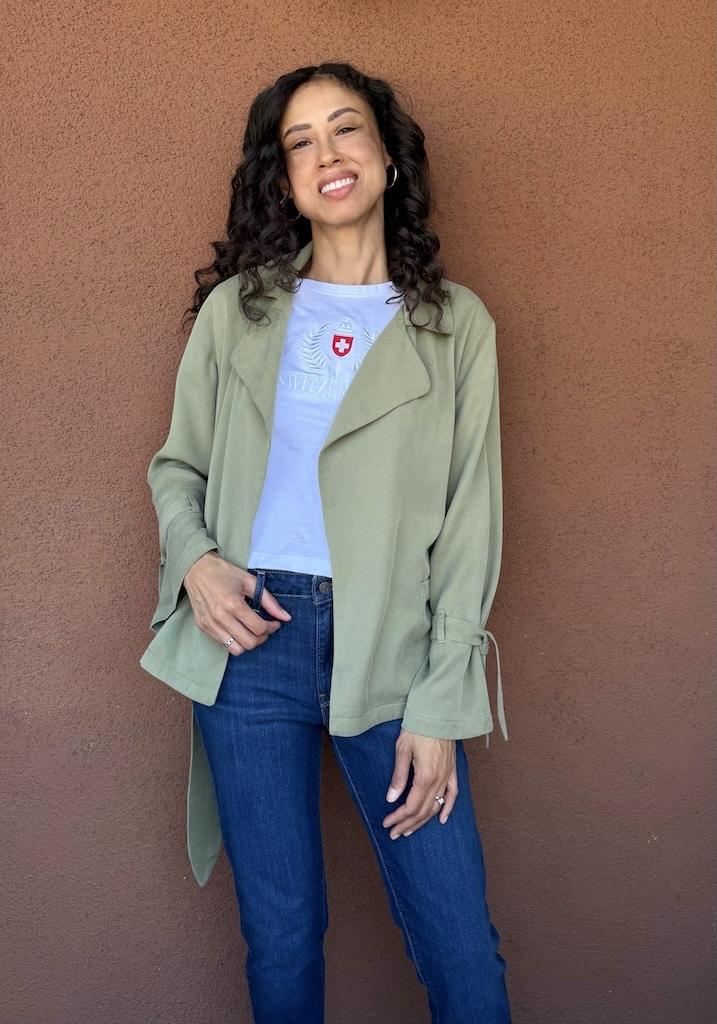
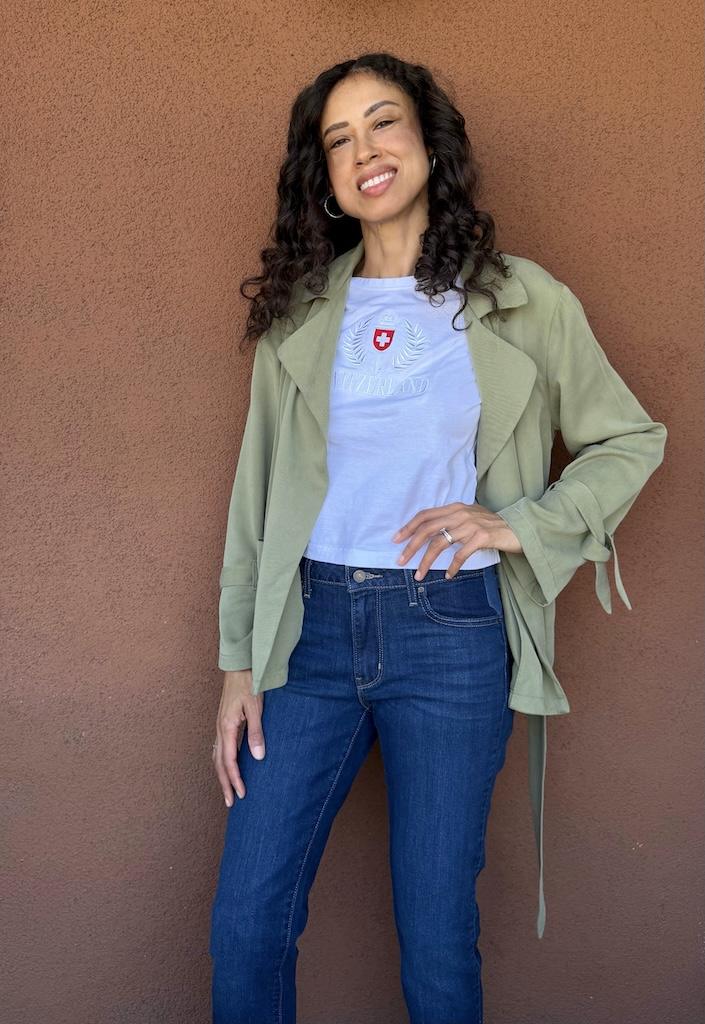
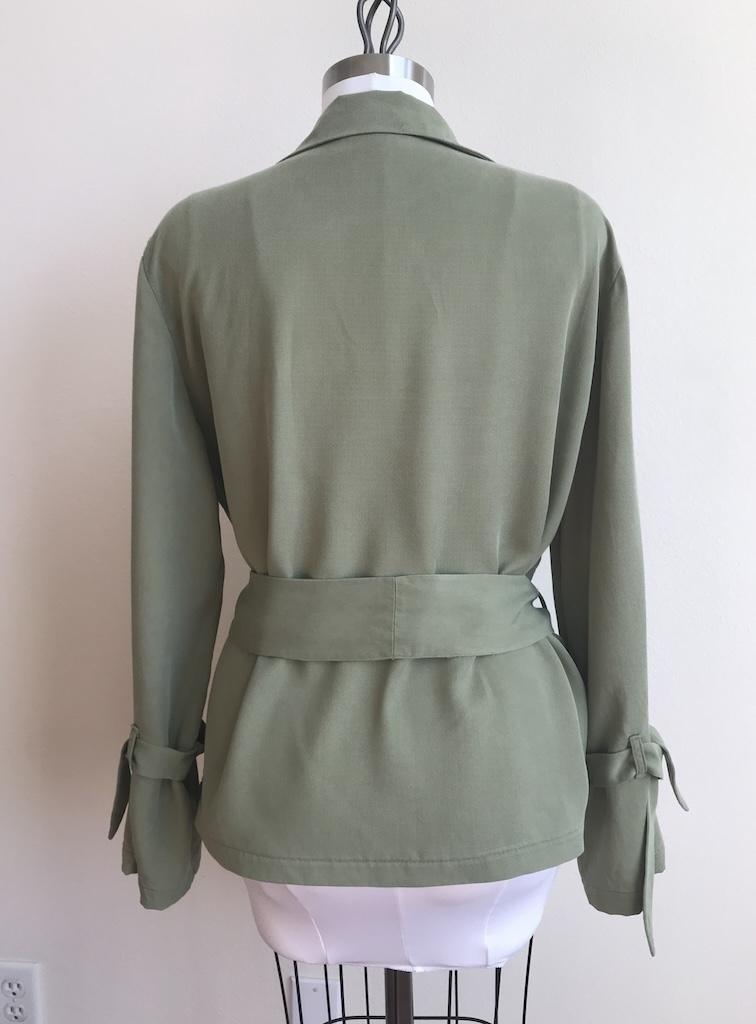
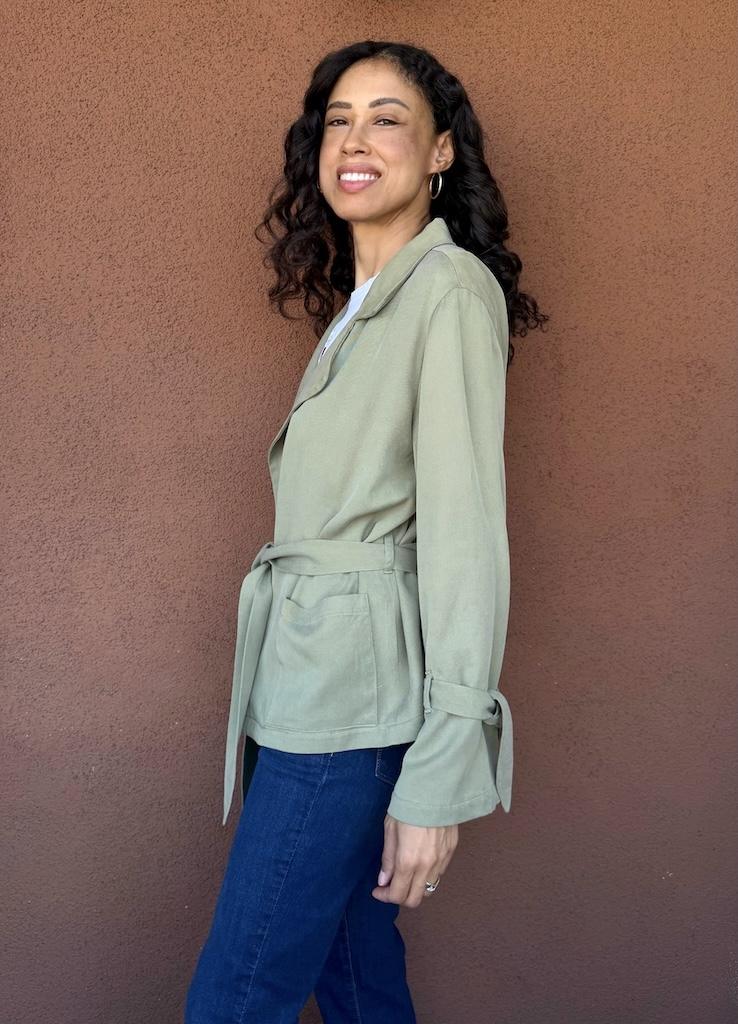
I made a pretty DIY soft trench coat in a shorter length. With the wrist ties, it’s fun to have in my wardrobe.
The fabric is dreamy, drapey, and flows when I walk. Like a classic trench, it’s versatile and can be the statement piece of your outfit.
I’ll tell you about the pattern, materials, my process, and share personal photos. You might want to make one of your own.
Simplicity S8554 Coat Pattern

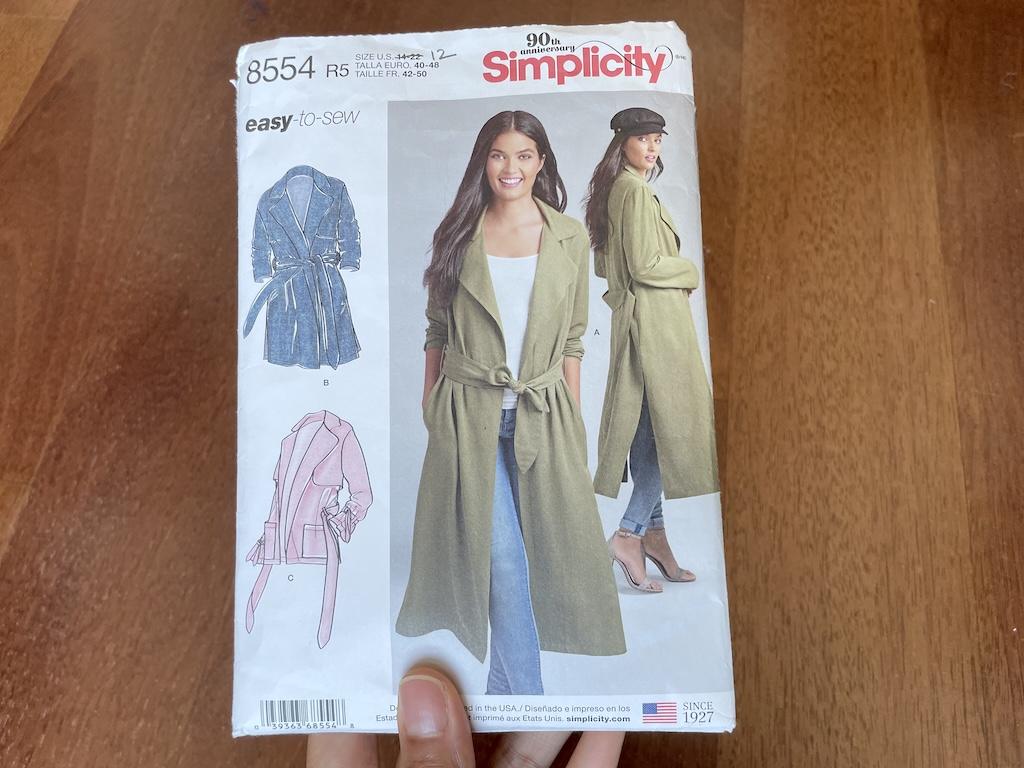
I bought Simplicity S8554 sewing pattern when it first came out, and I’ll keep this one forever. And I’ll use it, unlike some others in my stash that won’t ever see the light of day!
Although I made the short length, there are variations to make a knee-length or long coat too. It has a tie belt, and front or inseam pockets.
You can make the long sleeves with ties around the wrists. There is a front overlay variation that you’ll often see on classic trench designs.
The coat… I want to call it a jacket… is also unlined and easy to sew. It has a relaxed fit, and you could use this pattern to sew a basic duster.
It’s unstructured and has a lot of ease. So, you may want to size down for a closer fit.
It’s perfect for layering and to throw on for spring, summer, and fall. If you live in a nice, toasty area, it’d be nice for cool evenings!
Materials
Here’s everything I used to make this trench. Oh, and no notions needed.
Fabric

I think my fabric almost matches the model’s coat on the pattern envelope. Well, I happened to have it in my stash!
When I bought this Tencil twill at Joann, they had a lot of it. It’s made from natural fibers (semi-synthetic), which I love.
It’s flowy, yet still holds some shape, so it’s not too drapey. This fabric has a soft hand and a nice weight for light jackets and bottoms.
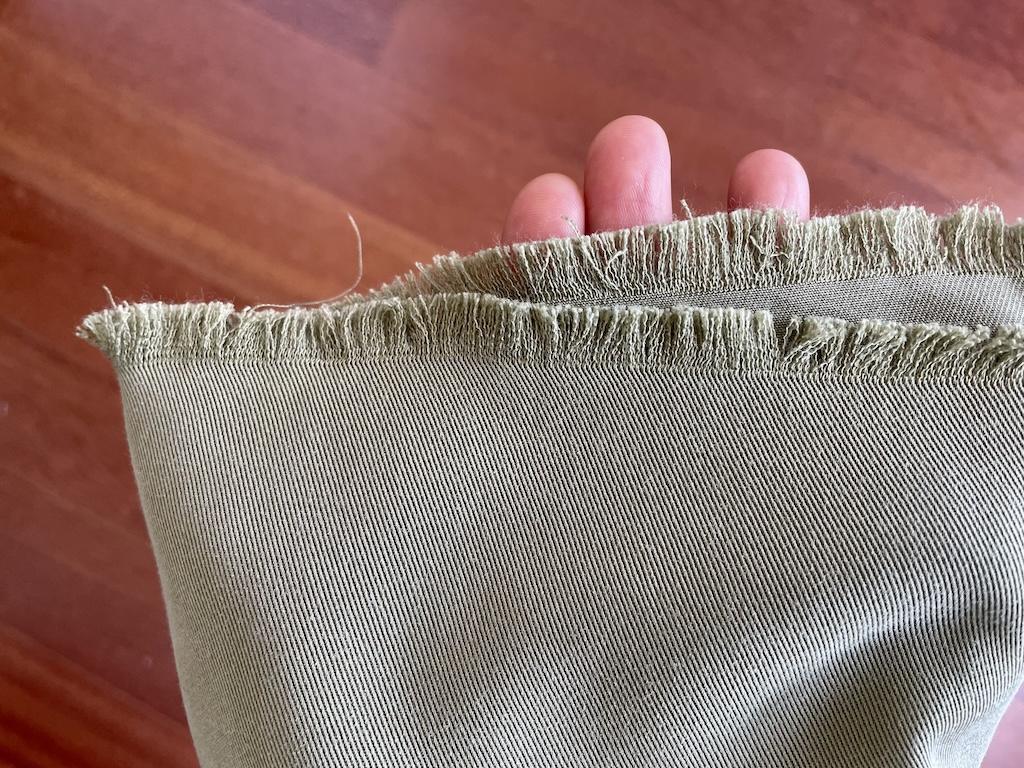
The color is a light green, and I wish I had more in other colors!
To make my mockup, I used muslin. It’s made of medium-weight cotton and has a little drape too.
Suggested fabrics include challis, chambray, soft lightweight linen types, and silky types.
Notions
You won’t need any notions for this except for interfacing. Yes, always use it when it calls for it in the sewing pattern.
I used lightweight fusible interfacing on the collar and lapel for structure.
Needle

I used a size 80/12 universal needle to sew this fabric. It was okay, but a microtex needle would have been better with this fabric.
Thread
For my sewing machine, I used matching Gutermann all-purpose thread made of 100% polyester.
For the overlocking, I used Maxi-Lock serger thread made of 100% polyester.
Sewing My Coat

Making this coat was straightforward, but handling the fabric was another thing! It likes to move it, move it.
Prepping
First, I had to pre-wash the fabric. Now, with Tencel twill, you want to handle it correctly.
This fabric can fade, fray, and shrink very easily, especially this one from Joann. I have a nicer quality one from Mood Fabrics that holds up much better.
I washed the fabric on a delicate cycle and then hand-dried it. After it was dry, I used an iron to press it on the wrong side.
I used the hottest temperature I could without it melting. Why? I wanted all the shrinkage to happen before cutting it.

You don’t want it to happen while sewing and pressing. Then the garment will end up smaller.
When cutting, this fabric can move and get off-grain. While tricky, it’s not as bad as cutting lightweight rayon.

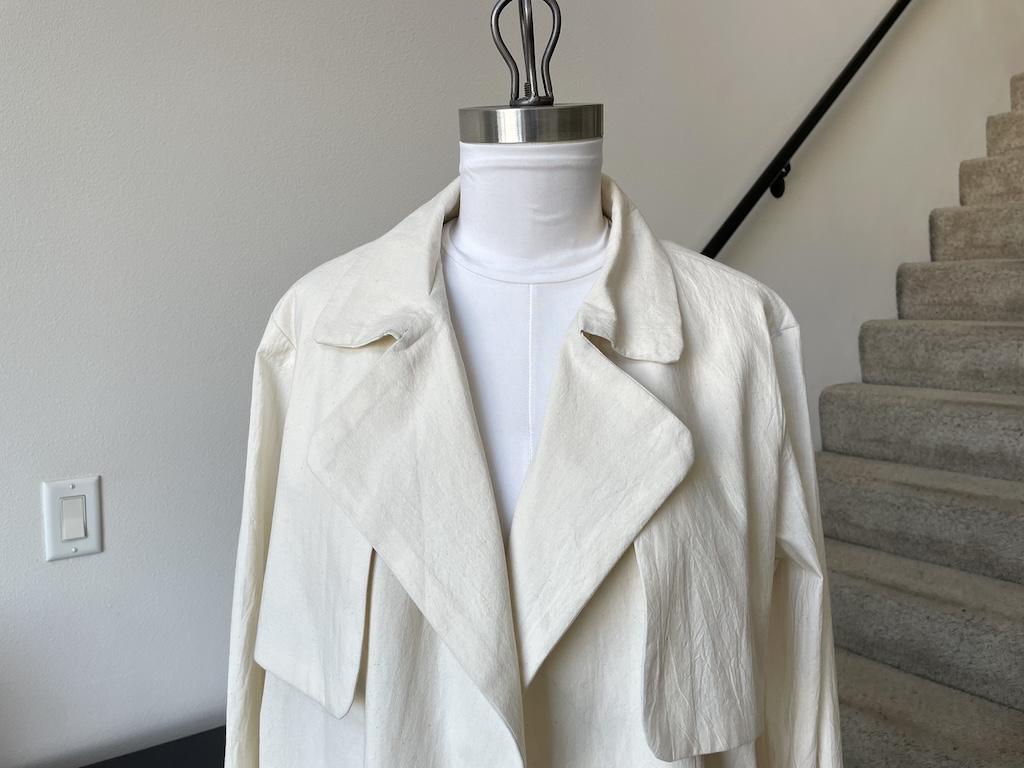
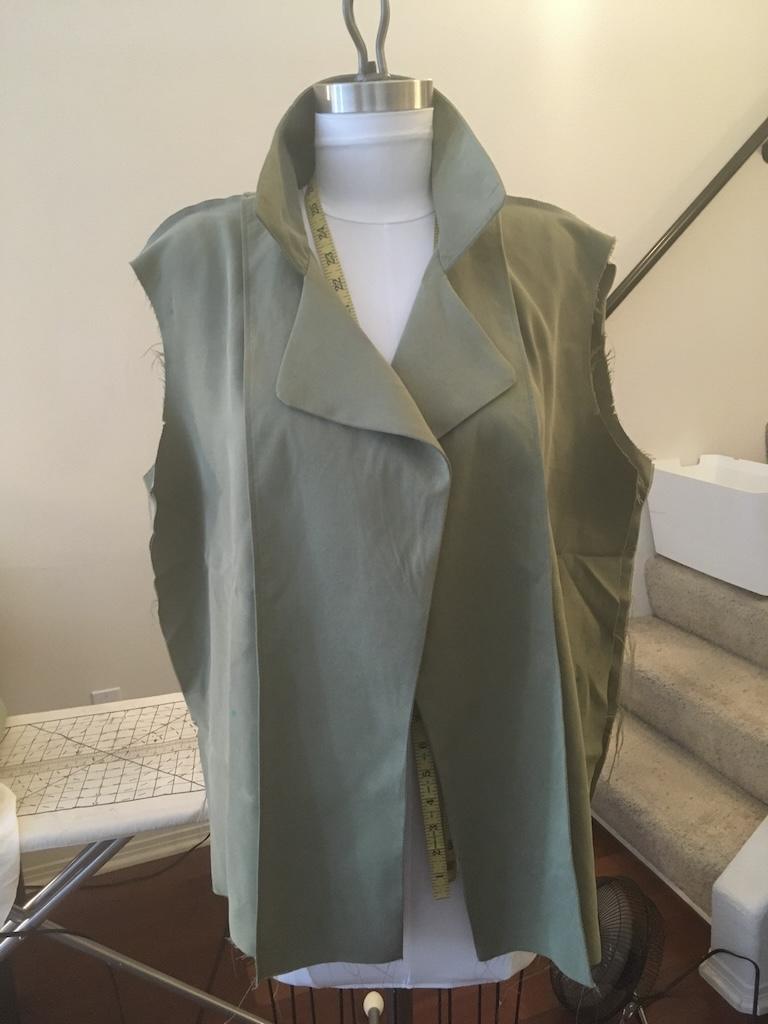
When I made my mockup, I made the overlay because I wanted to know how it looked.
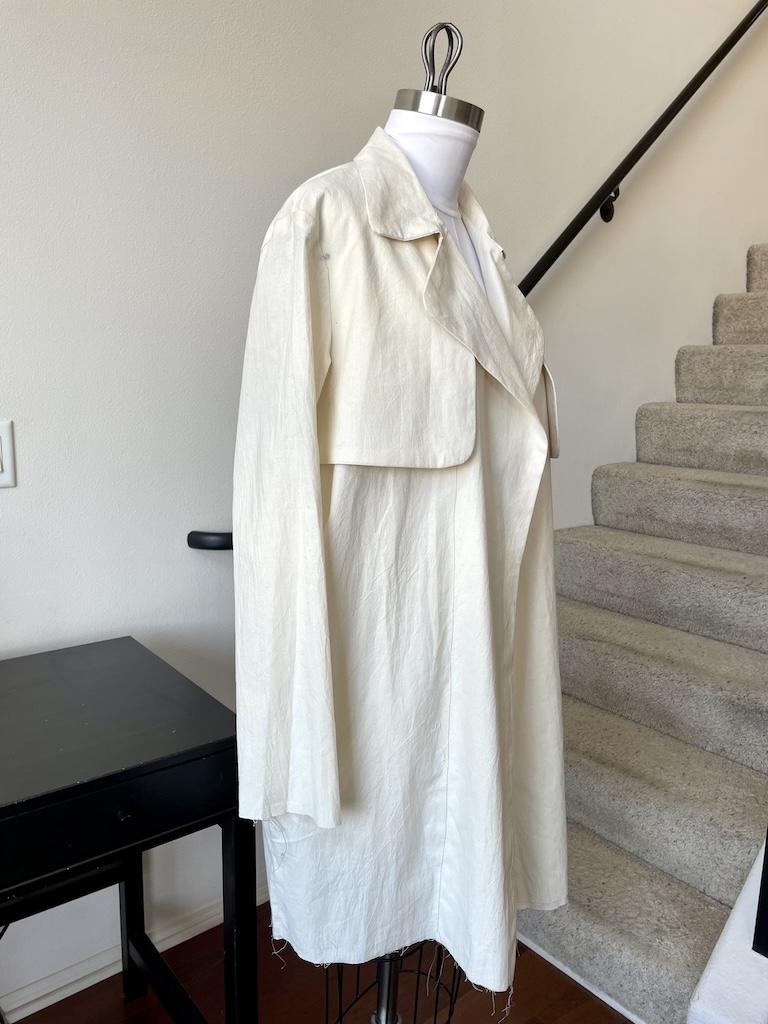
At the time, I had sized down, but I was on the fence about sizing up. I had bought the sewing pattern in the medium range, so I had to grade it down a size.
Construction

The actual sewing of this coat was not very difficult. I followed the directions for the mockup and final creation.
Because I made the shorter version, I didn’t have to worry about the length. If you make the long version, you’ll need to make the side slits.
And if you make an overlay, there’ll be more steps. I didn’t add one because I didn’t have enough fabric for any extras.

Sewing the collar, lapel, and the facing went well. As I mentioned before, just make sure you add interfacing.
Although this is a soft trench, you still need structure in places. Using a lightweight interfacing, like I did, will add enough structure.

I made front patch pockets on my coat. If you make the long version, you can make side inseam pockets instead.
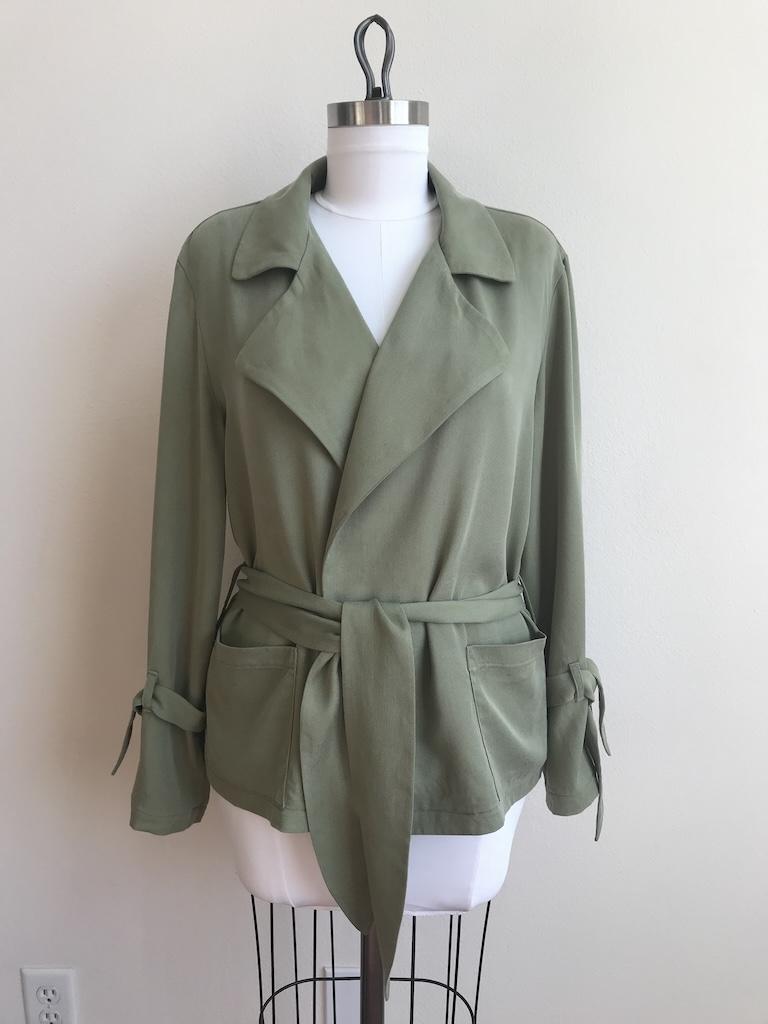
After sewing the front and back, I added the carriers. There are only two on the sides.

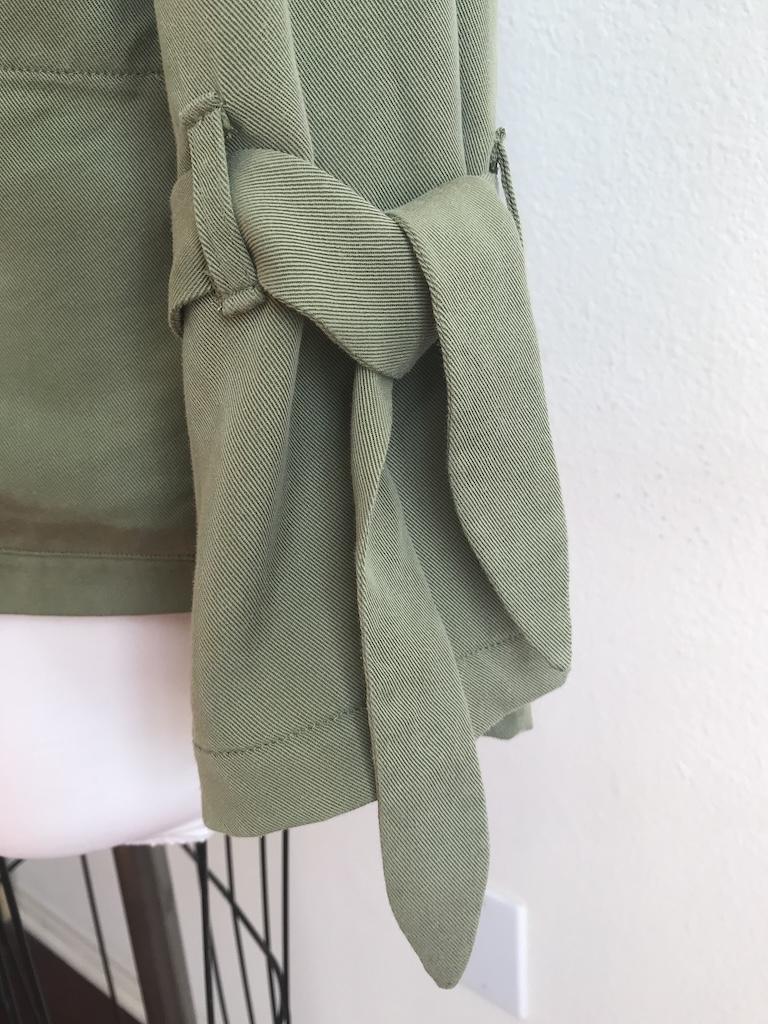
Sewing the sleeves wasn’t difficult, but I added ties around the wrists. I basted them in place before sewing the sleeve.
Just make sure you keep them on the outside of the sleeves and pin them out of the way. And you don’t want to sew them into the wrong seam… like I did!
After fixing that fiasco, I made the tie belt that goes around the waist. And that went well!
Adjustments

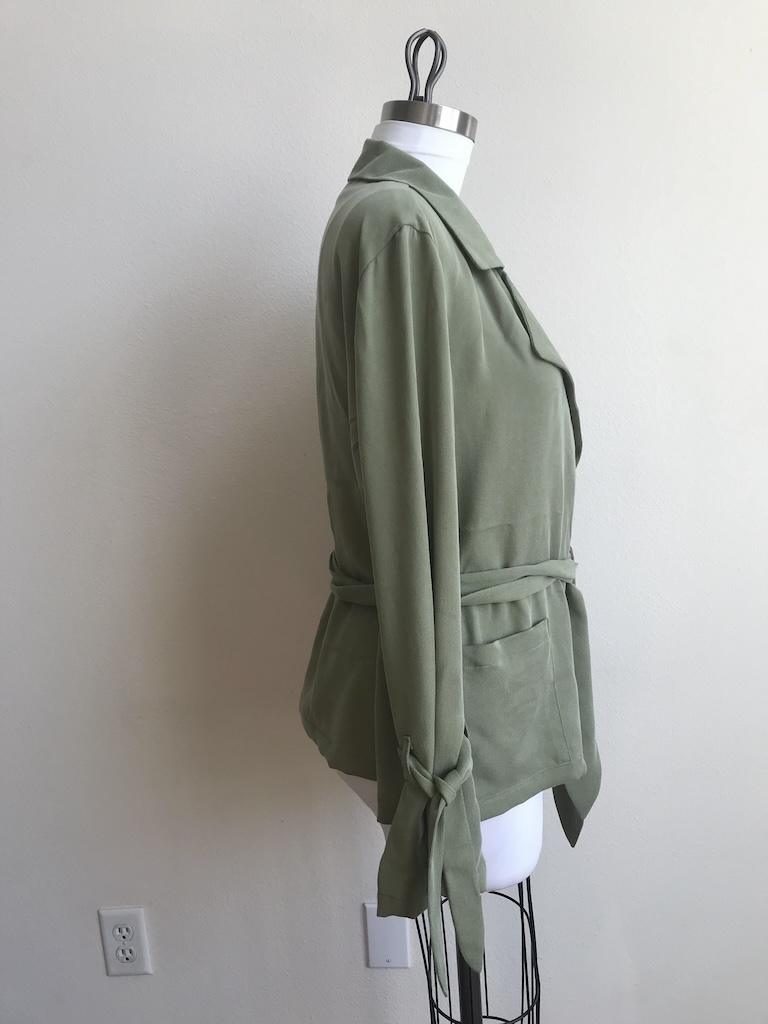
When I make this pattern again, I’ll size down. The ease is generous.
I actually ended up resizing it after wearing it. I took off a bit on the sides.
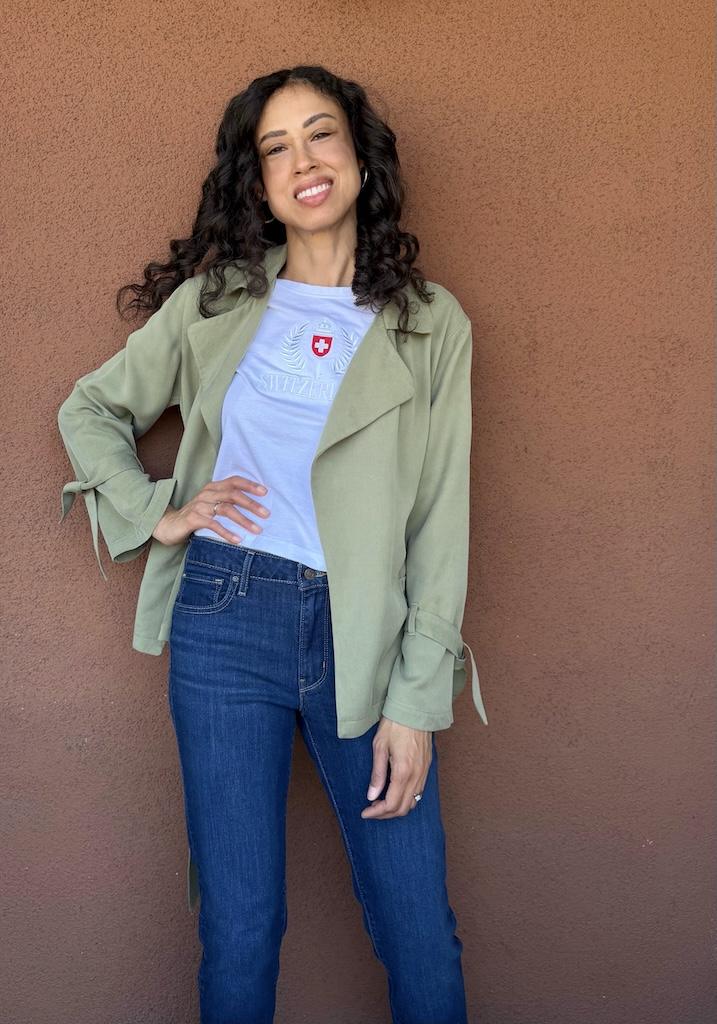
But I made more room in the armscye (armhole). There’s nothing that bothers me more than not having enough space in that area!
Finishing Details

I didn’t do anything special to finish off this coat, but I have ideas for next time. Instead of the ties around the wrists, I’ll use buckles or snaps.
The ties come undone and flop around when wearing them. This becomes annoying to re-tie them.
Otherwise, I really like how they look. I might make them more functional by tacking them in place.
Project Notes

To make this trench, you’ll want to choose a more flowy fabric. If you use something that’s too structured, you won’t get the soft look.
Be sure to make a mockup to check sizing. I sew a lot of the same brands, but some garments have much more ease.
Decide if you need more room for thicker tops. I have enough ease to wear a sweater underneath, but I don’t think I will.
I think the sleeve ties are cute, but if you’re an active person, they might get in the way. Mine come untied a lot, even when double-knotted.
Final Thoughts

I love how my trench coat came out. It pairs well on casual days when sporting some jeans and a T-shirt.
It brightens up an outfit in its own subtle way. And you could really wake it up by choosing fabric with bright colors or fun designs!
More Sewing Projects
- By the way, I like wearing a T-shirt and have a favorite pattern.
- What about some outerwear sewing tips for making your next masterpiece?
- I made a long jacket that also pairs well with a casual look.
- If you’re using a fabric like Tencel twill, learn how to wash handmade clothes so they won’t fade.
Originally published: September 16, 2025