Disclaimer: This post may contain affiliate links. As an Amazon Associate, I earn from qualifying purchases.
After I learned how to use the sewing machine properly, I started fixing garments. Upcycling clothes was a fun thing I did as a beginner.
And it’s perfect for sewists who are starting out. You’ll learn how to deconstruct garments, how they are made, and assemble fabric to make something else.
So if you’re on the fence, I’ll give you reasons why you might try it!
Learn How Garments Are Made
When upcycling clothes, one of the first things I have to look at is how they are made.
For example, if we have a pair of pants, we’ll see the pattern pieces that make up the front and back legs, pockets, and waistband.
You can see how those pieces are sewn together to create the garment. The stitches will indicate where the pattern pieces were put together.
If you study these stitches, you’ll see that the front and back legs were stitched together at the sides. And you’ll see how complex it might be to attach the pockets and waistband!
If you look at the grain of the fabric, you might even see the lengthwise grain running parallel to the pants legs. That’s why it’s so important to cut your fabric correctly.
And you’ll see how the inside of the pants, or the wrong side of the fabric, differs from the right side of the fabric.
Learn How to Deconstruct Garments

After studying how clothes are made, you’ll want to deconstruct the garment. Deconstructing is the opposite of constructing the garment (sewing it together).
And you can learn a whole lot about the sewing process by doing this.
If you’re just starting out, I’d practice seam ripping on some old clothes you don’t want. Basically, you’ll take apart the thread holding the seams so that you can use the pattern pieces.
Now, when I’m upcycling, I don’t always have to deconstruct. Sometimes I can cut pieces off the garments without seam ripping.
If I want to conserve as much fabric as possible, then I’ll keep the seams. I do admit this can be time-consuming, though.
And you may need to deconstruct many clothes to make a new garment. When I made my upcycled denim jacket, I used several skinny jeans to make it!
Assemble Fabric to Make a New Garment
Once you have deconstructed your garment, you’ll have to assemble the pieces together to make the new garment.
Many times when I upcycle, I end up with smaller fabric pieces. So I have to sew them together to have enough to cut bigger pieces.
And this is the most fun part of it because you can mix and match fabric from different garments!
Just make sure you pay attention to the grain. The lengthwise grain, or warp, runs up and down.
Sometimes you might find yourself short of fabric while doing an upcycle. And I’ve had to use the fabric on the crosswise grain or bias (diagonal) at times.
That can be okay, but you’ll have to remember it can affect how the garment hangs.
Recycle Old Clothes in the Closet

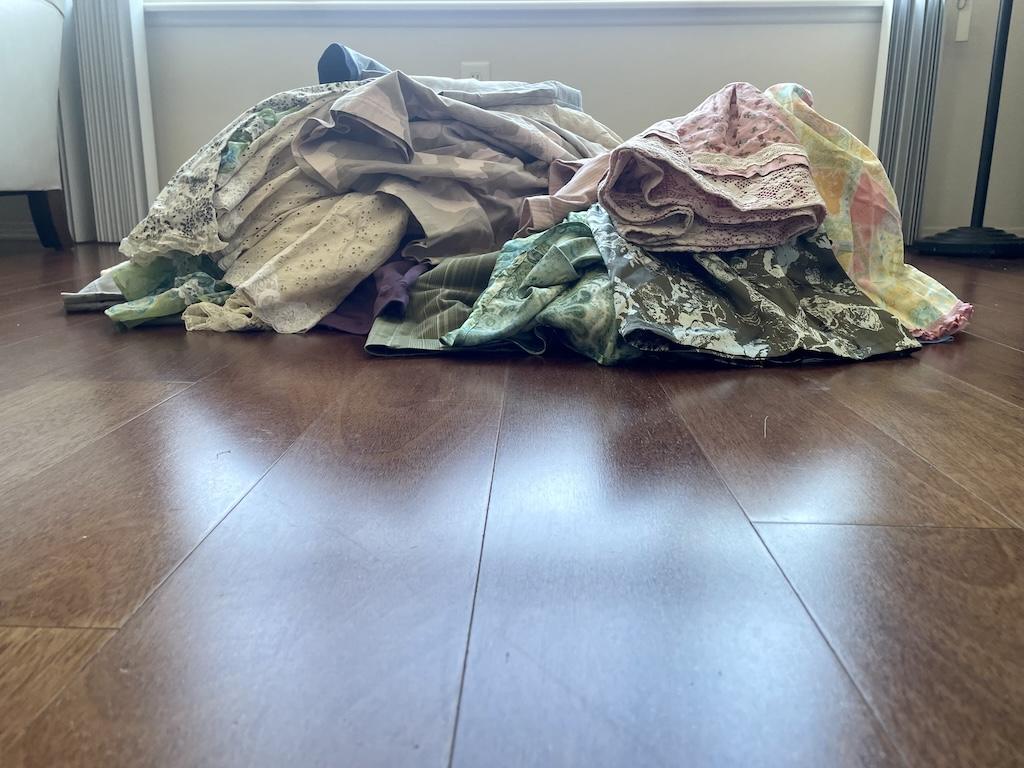
A great thing about upcycling is that you can use up clothes that you don’t wear.
Instead of them collecting dust in the closet or being thrown away, you can make them into something that you’ll enjoy wearing.
This can also reduce textile waste. You can make eco-friendly fashion!
Also, if you’re not too invested in those old clothes, you might not worry about making mistakes on them. That’s why I loved upcycling as a beginner.
I got really creative, plus I was experimenting on clothes I didn’t wear anyway.
I also found a lot of cheaper clothes at the thrift store and made them into cuter tops! And I bought those clothes for less than $5.
By the way, there’s a whole topic on doing this. It’s called Thrift Flipping, and you can make money selling your flips!
Overall
Upcycling is a great technique for beginners. I actually started doing this while learning to sew from patterns.
I still enjoy doing it today, and have gotten pretty good at it! Maybe you’ll even make a nice income from it.
Read More
- I’ll tell you why I stopped buying sewing patterns.
- You should wear your nice things, and I’ll tell you why.
- What kinds of clothes should you make during weight fluctuations?
Originally published: September 1, 2026